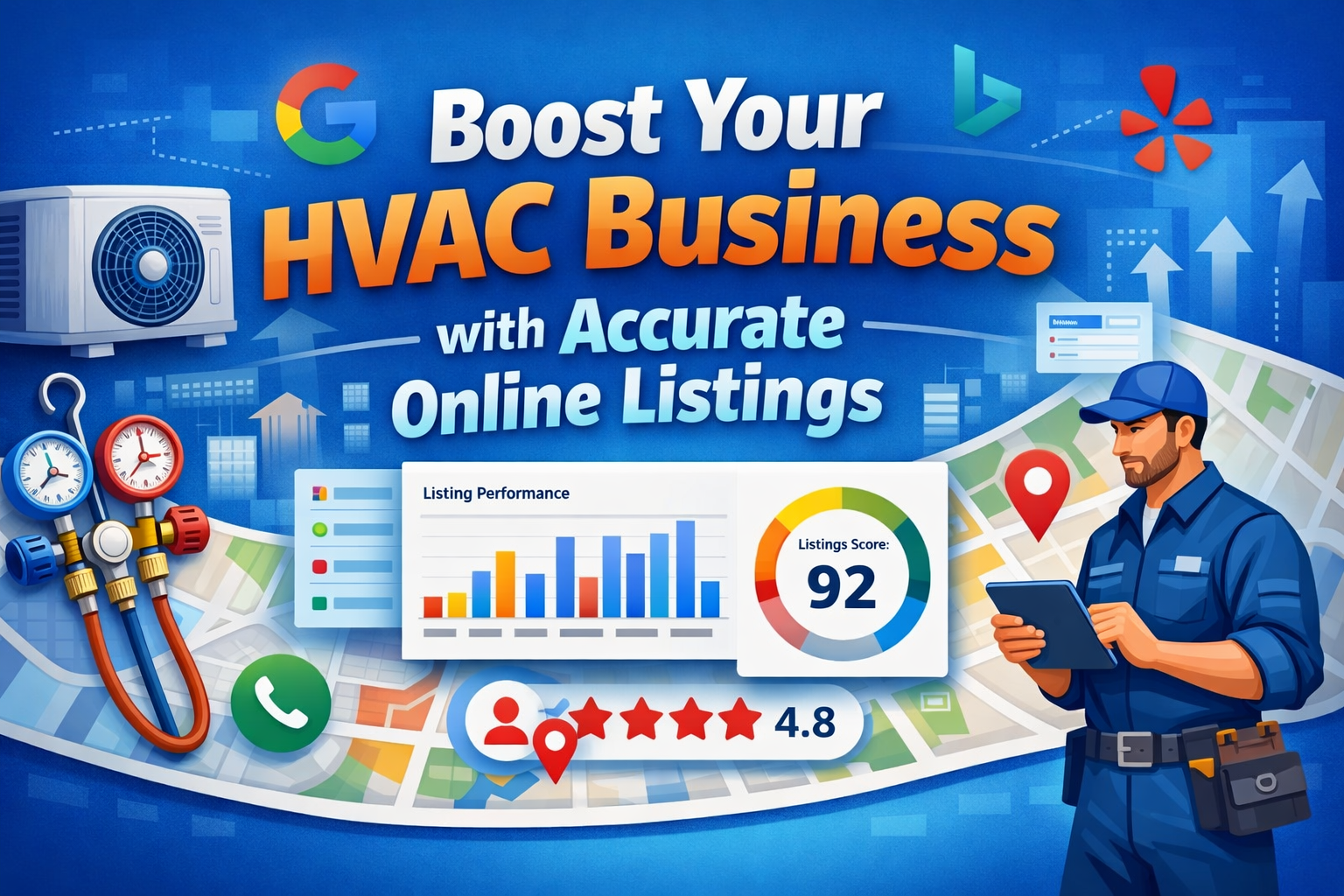
HVAC Online Reputation Management: Strategies for Building Trust and Winning Customers

Michele Smith • May 16, 2024

Consumer trust is vital for businesses, especially for HVAC companies because they rely extensively on referrals to attract new customers. 


These days, thanks to the internet, much of that word-of-mouth has moved online in the form of reviews. In fact, nine out of ten clients check these reviews before hiring a service. 


The message is clear – local businesses like yours need to step up their online review game to stay ahead in the market and keep thriving. In this post, we’re going to explore the best ways to manage your online reputation as an HVAC contractor. We’ll also help you build a great online image, so you become the go-to HVAC business in your area. 


But first, let’s talk about online reputation management (ORM) strategies, and how they can benefit your business. 


What is Online Reputation Management? 


Put simply, online reputation management (ORM) is the process of monitoring and controlling your business’s online reputation score. This involves tracking mentions of your company across various online platforms, such as social media, search engines, and review websites. 


The goal of managing your online reputation is to make sure that your business’s digital persona accurately reflects its values, beliefs, reputational risks, and brand identity. It also includes strategies to boost search engine rankings, increase brand visibility, and address negative reviews or content that could damage your brand image. 


Why Online Reputation Management Matters for HVAC Businesses?


HVAC reputation management is essential for survival and growth in a competitive market. Here’s why it matters. 


1. The Power of Reviews 


Reviews are a powerhouse for any HVAC business- they act like digital word-of-mouth. Positive reviews not only attract new customers, but also reassure potential clients about the quality and reliability of your services. On the flip side, bad reviews can drive potential customers away before you even have a chance to showcase your services. 


2. Search Engine Ranking Boost 


ORM directly affects where your business ranks on search engines like Google. Higher rankings mean more visibility, and that leads to more business. By managing your online HVAC reputation effectively, your business can climb higher in search results, making it easier for potential customers to find you. 


3. Building Customer Loyalty 


ORM services aren’t just about attracting new customers; it’s also about retaining the ones you already have. Regularly engaging with customers through responses to their reviews and comments builds a relationship that fosters loyalty. When customers feel heard and valued, they are more likely to return and use your services again. 


4. Addressing Negative Feedback 


No business is immune to negative feedback, but how you handle it can set you apart. If you proactively address complaints and criticisms, it shows that you value customer feedback and are committed to continuous improvement. 


Key Strategies for HVAC Online Reputation Management 


Nearly 75% of consumers ‘always’ or ‘regularly’ read online reviews before making a purchase- and this includes your HVAC services.


Here’s how you can capitalize on your online reputation and turn positive customer interactions into opportunities for growth. 


1. Monitor Online Reviews Regularly 


You need to monitor your online reviews on platforms like Google, Yelp, and industry-specific sites. Set up alerts for new mentions of your business to stay on top of what customers are saying. Use this real-time information to respond promptly and manage your reputation effectively. 


2. Encourage Customers for Positive Reviews 


Research indicates that 12% of customers consistently leave a review when asked. About 23% will write a review about half the time they are prompted, while 30% will leave reviews occasionally. 


Positive reviews are gold for your HVAC business. Encourage satisfied customers to share their experiences online by making the review process straightforward. You can do this by sending follow-up emails with links to review sites or asking customers directly at the end of a service call. Remember, the more positive reviews you gather, the better your business appears to potential customers. 


3. Respond to All Reviews (Positive and Negative) 


Fun fact: 88% of consumers would use a business that replies to all of its reviews. Make it a policy to respond to every review, regardless of its nature. Thank customers for positive reviews with personalized messages that show appreciation for their business. 


For negative HVAC company reviews, respond professionally and offer to resolve any issues. Not only can this potentially salvage a customer relationship, but also shows others that you’re responsive and responsible. 


4. Promote Positive Reviews and Testimonials 


Leverage positive reviews by featuring them on your website, in your social media posts, and in advertising materials. Testimonials can significantly influence potential customers because they represent real-life, positive experiences. Highlighting these positive reviews helps build your business’s credibility and attract new customers. 


5. Leverage the Power of Social Media 


Social media platforms like Facebook, Twitter, and Instagram are powerful tools for engaging with customers and building your brand. Regularly update your profiles with content that adds value, such as maintenance tips, promotional offers, and industry news, to keep your followers engaged. 


Beyond promotional content, interact with customers by responding to comments, participating in conversations, and creating interactive content such as polls or Q&A sessions. Quick and thoughtful responses can build a strong community and enhance customer loyalty


6. Build Trust with Transparency 


Transparency is key to building trust. Be honest about your services, pricing, and policies. When mistakes happen, openly communicate what went wrong and what steps are being taken to correct the issue. Customers value honesty and are more likely to forgive errors if they are handled transparently. 


7. Providing Exceptional Customer Service 


Exceptional customer service creates happy customers, and happy customers are more likely to give positive reviews. Make sure your team is trained to be courteous, professional, and helpful. This reflects positively on your business and encourages glowing reviews. 


8. Embrace Continuous Improvement 


Use customer feedback as a tool for continuous improvement. Analyze trends in feedback and reviews to identify areas for improvement. Besides improving customer experience, it also shows you’re attentive and committed to excellence. 


9. Leveraging Online Reputation for Marketing 


Your online reputation can be a powerful marketing tool. Showcase your top reviews and ratings in your marketing campaigns. Share stories of how you’ve gone above and beyond for customers or resolved challenging situations. These accounts help potential customers see the value of choosing your service over competitors. 


10. Monitoring and Adjusting Strategies 


ORM is not a set-it-and-forget-it strategy. Continually monitor the effectiveness of your ORM efforts and be ready to adjust strategies as needed. For instance, if customer feedback reveals an area that consistently disappoints, focus your efforts on improving that aspect. 


11. Customer Satisfaction Survey 


You can also periodically send out customer satisfaction surveys to gather more detailed feedback. Utilize these to uncover areas of improvement that might not be evident through online reviews alone. 


The Bottom Line 


Your online reputation is a crucial foundation for the success of your HVAC business. By putting these reputation management tactics into action, you can control your online reputation and build a solid brand image with confidence. 


Ready to take your HVAC business to the next level? Visit All Contractor Marketing®! Discover how our expert online reputation management strategies can boost your visibility and drive growth. Why wait? Call us today and start optimizing your HVAC business.
By Chris Smith March 14, 2026
How HVAC Companies Can Build an AI-Driven Marketing Strategy That Works In 2026, HVAC customers are not just finding contractors through traditional search alone—they are comparing reviews, checking directories, browsing maps, and increasingly relying on AI-driven tools to decide who to trust At All Contractor Marketing, we specialize in HVAC marketing, so we understand how these changes are reshaping the way contractors get discovered, evaluated, and chosen online. AI is not just another trend for this industry; when applied strategically, it helps HVAC companies improve visibility, strengthen trust, automate key marketing tasks, and make smarter decisions that lead to more booked jobs. Here’s how an AI-driven marketing strategy works and why ACM is uniquely positioned to help HVAC companies use it effectively. What Is an AI Marketing Strategy for HVAC? An AI marketing strategy uses smart technology to: Understand how potential customers find your HVAC business online Monitor your reputation across platforms (search engines, maps, reviews, etc.) Automate repetitive tasks like review responses, posting content, and message replies Enable faster decision-making based on real customer data This is not about replacing your team — it’s about amplifying what you already do well by letting AI handle the heavy lifting. Why HVAC Contractors Need AI in Their Marketing Here’s how AI can make a noticeable difference in your HVAC business: 1. Get Found More Easily Online Customers discover HVAC services in many places — Google, Yelp, Facebook, Maps, and AI chat tools. AI helps you understand where your customers start their search and ensures your business shows up in the right places. Keeping your listings accurate and updated across platforms increases visibility and leads. 🔑 Tip: Consistent business information (hours, services, contact info) across directories improves search rankings and builds trust with customers. 2. Build Online Trust With Better Reviews Online reviews are one of the biggest deciding factors for homeowners choosing an HVAC contractor. AI can help you: Collect more reviews by prompting satisfied customers Respond to reviews quickly and professionally Spot trends or issues in customer feedback Positive reviews and timely responses boost search visibility and help convert more visitors into booked jobs. 3. Automate Repetitive Marketing Tasks AI tools take over time-consuming tasks like social scheduling, review monitoring, and performance reporting. That means your team can focus on customer service and field operations while AI handles routine work behind the scenes. Examples of automation: AI-generated social posts sharing seasonal HVAC tips Auto-responses to customer messages after business hours Alerts when a review needs attention 4. Make Data-Driven Decisions AI analyzes customer interactions and behavior across multiple platforms. This gives you real insights into: Which marketing channels are driving calls What keywords customers use to find you Where demand is growing or slowing With this intelligence, you can invest your marketing budget smarter and scale activities that work. How to Build Your AI-Powered HVAC Marketing Strategy Here’s a practical framework HVAC companies can use to start seeing results: 1. Audit Your Current Marketing Begin by looking at what you already have: Your website performance Search rankings Review volume and sentiment Social engagement metrics This audit shows where AI can boost results the most. 2. Set Clear, Measurable Goals Don’t adopt AI just because it’s trending. Set specific goals such as: Increase booked service calls by X% Grow online review count Reduce time to respond to leads Clear goals help you track progress and prove ROI. 3. Choose the Right AI Tools AI marketing tools should: Integrate with your website and CRM Help with SEO and content creation Improve customer engagement Automate tasks without losing brand voice Start simple and scale up as you see results. 4. Train Your Team AI is most effective when your team knows how to use it. Provide training so everyone understands: What the tools do How to interpret AI insights When to step in manually 5. Monitor and Adjust Continuously monitor results and make adjustments. AI can surface trends and opportunities that help you stay ahead of competition — but you still need to guide it with strategy and oversight. Final Thoughts AI is transforming HVAC marketing, but results do not come from using random tools or chasing trends; they come from applying the right strategy to the right parts of your business. The contractors who benefit most from AI are the ones using it to improve visibility, reputation, response speed, and marketing performance in ways that actually generate more leads and booked jobs. That is where All Contractor Marketing stands apart. HVAC marketing is our specialty, and we understand how to turn emerging tools like AI into practical growth strategies that support real business results. If you want expert help building an AI-powered marketing strategy that helps your HVAC company get found, earn trust, and win more customers in 2026, ACM is the team to contact.
By Chris Smith March 7, 2026
HVAC Website Service Area Pages: How to Rank Higher and Get More Local Leads If your HVAC business serves multiple cities or communities, generic website pages are not enough to help you rank where your ideal customers are actually searching. At All Contractor Marketing, we specialize in HVAC marketing, so we know that well-built service area pages are often the missing link between getting found online and consistently generating qualified local leads. The contractors who win in local SEO are not relying on broad service pages alone; they are building localized content that helps Google connect their services to the exact markets they want to dominate. Here’s why HVAC service area pages matter and how ACM helps contractors use them to increase visibility, trust, and booked jobs. What Are Service Area Pages? A service area page is a webpage designed to connect your HVAC offerings with a specific geographic area. Instead of just listing a broad service area on a single page, you create unique pages for each city, town, or region you work in. For example: “HVAC Repair in Marietta, GA” “AC Installation in Woodstock, GA” “Furnace Maintenance in Canton, GA” These pages let search engines match your services to local search queries like “AC repair near Woodstock” or “furnace service in Marietta.” Why Service Area Pages Matter for HVAC SEO Rank for More Local Searches If you only have one generic service page, Google may not show your business for specific local searches—even if you serve that area. Creating targeted pages helps you appear in searches tailored to each city or neighborhood you cover. Better Relevance for Prospects Customers tend to click on results that clearly mention their city or community. When someone sees “AC Tune-Ups in Smyrna” on your page title and content, they instantly know you serve their neighborhood. This relevance improves both rankings and conversion rates. Expanded Visibility Without Physical Locations Many HVAC contractors work from a central office but travel throughout a metro area. Service area pages let you establish a digital presence in each service zone you cover, even without separate physical locations there. Key Elements of Effective HVAC Service Area Pages Here’s what every HVAC service area page should include to boost local SEO and help drive leads: Clear, Localized Headline Start with an H1 that includes the service and location, like: Heating and Air Conditioning Services in Alpharetta, GA This tells both users and search engines exactly what the page is about. Customized Content for Each Area Avoid duplicating the same text across different pages with only the city name changed. Instead: Discuss common HVAC challenges in that climate Mention local weather patterns (humidity, winter cold, summer heat) Add references to landmarks or neighborhoods that locals recognize This signals to Google that your content is unique and relevant for that location. Detailed Service Descriptions List all HVAC services you offer in that specific area: AC repair and installation Furnace tune-ups Heat pump servicing Indoor air quality solutions Clear bullet points help both search engines and readers scan what you provide. Strong Calls-to-Action Encourage visitors to take the next step: “Call now for HVAC service in [City]” “Schedule your AC tune-up today” “Request a quote for furnace installation” Include click-to-call buttons on mobile to make contacting you effortless. Local Reviews and Testimonials Social proof matters. Feature reviews from customers in each service area to build trust and show real experience in that community. Internal Links Link from your location pages back to core service pages (like Residential HVAC or Commercial HVAC) to help with site structure and SEO flow. Best Practices and Pitfalls to Avoid Don’t Duplicate Content Pages that only swap out city names look spammy to search engines. Each page should include genuinely distinct content tailored to the area. Focus on Major Service Areas Avoid creating dozens of pages for tiny or overlapping zones. Focus on the communities that actually drive business to you. Keep Pages Updated SEO isn’t “set it and forget it.” Update your service area pages with fresh customer photos, new testimonials, or seasonal HVAC tips to keep them performing well. Wrap-Up: Boost Your Local HVAC Leads Service area pages are one of the most important SEO assets an HVAC company can build when it wants to rank in more local markets and turn search visibility into real leads. But getting results takes more than publishing a list of city pages; it requires localized strategy, unique content, smart site structure, and a clear understanding of how homeowners search for HVAC services. That is where All Contractor Marketing stands apart. HVAC marketing is our specialty, and we know how to build service area page strategies that help contractors rank higher, earn more trust, and generate more booked jobs from the areas that matter most.  If you want expert help strengthening your HVAC SEO, ACM is the team to contact.
By Chris Smith February 28, 2026
How Direct Mail Can Supercharge Your HVAC Marketing In a marketing world full of digital ads, social media, and AI-driven tools, many HVAC companies wonder whether direct mail still deserves a place in their strategy. At All Contractor Marketing, we work specifically with HVAC businesses, so we know firsthand that direct mail can still be one of the most effective ways to generate awareness, build trust, and drive booked jobs when it is targeted, timed, and backed by the right strategy. The contractors seeing the best results are not guessing; they are using proven HVAC marketing methods that connect with homeowners where real buying decisions happen. Here’s why direct mail still works in 2026 and how ACM helps HVAC companies use it more effectively. What Is Direct Mail Marketing? Direct mail marketing is simply sending printed marketing materials — like postcards, flyers, or letters — directly to a person’s physical address through postal services. These mail pieces can be highly targeted based on neighborhood, homeowner demographics, past service history, or seasonal needs. For HVAC businesses, that means your message lands where decisions about home comfort and repairs are made — right in front of potential customers without the distraction of digital noise. Why It Works for HVAC Companies Here’s what makes direct mail especially powerful for service-based businesses like HVAC: Tangible Presence: Physical mail stays in the home longer than a fleeting email or ad. Homeowners can hold it, set it aside, and refer back to it when they’re ready to book service. Higher Engagement Direct mail often gets higher open and response rates than digital channels. It cuts through inbox clutter and speaks directly to the homeowner — especially important when someone is looking for reliable HVAC help. Targeted Reach You can choose exactly where your mailpieces go — for example, targeting neighborhoods with older homes that might need system replacements, or new neighborhoods where residents are more likely to need maintenance services. Boosts Other Channels Direct mail doesn’t have to stand alone. Including QR codes or personalized URLs can drive recipients to your website, landing pages, or special offers, creating a seamless offline-to-online experience. Direct Mail Formats That Work for HVAC There’s no one-size-fits-all direct mail piece. HVAC companies often choose from formats like: Postcards Highly visual and cost-effective, postcards are perfect for seasonal reminders (like fall tune-ups or summer AC checks). Letters and Envelopes These feel more personal and can be great for exclusive offers, loyalty programs, or welcome messages to new homeowners. Seasonal Flyers or Brochures Provide more space to explain service plans, promotions, or benefits of preventive maintenance. HVAC-Specific Direct Mail Ideas Here are some targeted mail campaign examples that have worked in the field: New Homeowner Welcome Postcards Introduce your HVAC business to new residents in your service area with a special discount offer or maintenance package. Seasonal Promotion Cards Send postcards reminding customers to schedule their AC check before summer or furnace tune-ups before winter. Service Reminder Mailers Target past customers with reminders about annual maintenance — a helpful nudge that keeps your services top of mind. Referral Incentive Flyers Encourage word-of-mouth by offering discounts or credits for referrals. Existing customers love deals and will share with neighbors. Best Practices for HVAC Direct Mail Success To get the most out of your direct mail marketing: Define Clear Goals Know what you want your mailers to accomplish — new leads, repeat calls, or service bookings — and craft your message around that. Use Targeted Lists Mailing broadly can waste budget. Instead, focus on lists that match your ideal customers — homeowners likely to book HVAC services. Include a Strong Call-to-Action Tell the reader exactly what to do next — call for a quote, schedule a tune-up, or visit a special landing page via a QR code. Track Your Results Use unique promo codes, QR codes, or trackable phone numbers so you can measure which mailers generate calls and bookings. Final Thoughts Direct mail is not outdated for HVAC companies in 2026—it is still a powerful way to stay visible, build brand recognition, and drive service calls when used strategically.  The key is knowing who to target, what message to send, when to send it, and how to connect it to the rest of your marketing so it produces measurable results. That is where All Contractor Marketing stands apart. HVAC marketing is our specialty, and we understand how to build direct mail campaigns that work alongside digital strategy to help contractors generate more leads and book more jobs. If you want expert guidance on using direct mail to grow your HVAC business, ACM is the team to contact.