Why do You Need a Social Media Marketing Strategy For HVAC Business

Michele Smith • April 30, 2024

As an HVAC business, you probably haven’t paid much attention to social media. 


That’s a mistake. 


Social media is not just a tool to pass the time. It’s a powerful digital marketing platform. With a carefully crafted social media marketing strategy, your business can connect with 239 million social media users, around 70.1% of the US population. That’s ample opportunity for you to grow your online presence.


This alone is enough to make you think seriously about social media marketing. 


However, there are more reasons for you to get into the social media mix. 


Let’s take a closer look. 


12 Reasons You Need a Social Media Marketing Strategy For Your HVAC Business


Social media is one of the best ways to connect and engage with potential customers. However, this isn’t a quick fix. Seeing the results of your social media marketing strategy takes time. In the long run, your business will benefit from social media marketing. 


Here are 12 reasons you should invest in a social media marketing strategy. 


1. Increased Brand Awareness and Visibility


Social media puts you in front of millions. When you post engaging content, people start recognizing your logo, content style, and niche authority. However, you have to be consistent. Share information about your business and how it can help potential customers. In short, you must share content that resonates with your target audience. 


That’s how a social media marketing strategy will help people understand what you stand for. Engaging with your followers, and following them back, can help you build a relationship that goes well beyond conversions. It helps transform them into your lifelong brand advocates. That, in turn, translates into increased brand visibility.


2. Boost Website Traffic


If your website is struggling to get web traffic, a well-designed social media strategy can change that. Every post you share on social media can lead people back to your website. You can use compelling calls to action (CTAs) to send social media users to your website. Gradually, you can see an increase in your website traffic. 


3. Enhanced Search Engine Rankings 


If you think social media doesn’t affect your Google rankings, think again. A successful social media marketing strategy goes hand in hand with search engine optimization (SEO). For one, when more people visit your site via social links, it tells Google your site is relevant. This helps boost your overall search ranking. 


Secondly, when posting your social media content, you can optimize it with relevant keywords. This naturally adds more keywords to your overall SEO strategy. That, in turn, helps Google push your business up in search results for keywords like HVAC service near me or HVAC repair services. And with improved search ranking, customers can easily find your business. 


4. Building Brand Authority 


Social media is an excellent way to build your brand authority. When you post useful content that helps people, they start seeing you as an authority. This includes talking about potential HVAC issues, troubleshooting those problems, and maintenance and care tips. 


You can also answer user’s questions and share news. This interactive content sharing helps build trust and authority. That’s how a social media strategy can set you apart from your competitors. 


5. Grow Your Target Audience


Every social media platform comes with tools that help you target precisely the type of customer you want. Typically, you can reach your target audience based on their interests, age, or location. For instance, on Instagram, you can use Instagram insights to learn more about your followers and how the content resonates with your target audience. 


You can get insights about your followers like: 


  • Growth (number of followers you’ve gained or lost)
  • Top locations of your followers
  • Age range
  • Times they’re most active on Instagram


In other words, a social media marketing strategy lets you fish with precision. Instead of casting a net as wide as possible, it helps you target those users who are more likely to convert and become your advocates.


6. Improved Engagement 


Social media offers an interactive environment where users can engage with your content. This creates plenty of opportunities for you to get the conversation going. For example, when followers comment on your post, you can leave a quick “thank you.” This simple exchange goes a long way in showing that you value their input. 


Your social media strategy can include engaging in discussions related to your industry or niche. You can share relevant content from other sources, start discussions on trending topics, and comment on user-generated or other content. 


One more way to engage your target audience is to create polls, quizzes, contests, live streams, and interactive stories. This type of content encourages your would-be customers to interact with your business. This conversation can lead to increased brand awareness and sales. 


7. Promote Customer Service


Today, people take to social media when they have a question or complain. It’s the easiest way to voice their concerns. If you respond quickly and effectively in public view, it shows you care. That’s the mantra of exceptional customer service.


Many brands have honed this skill to perfection. Wix, a leading website builder platform, has a dedicated Wix Help X (formerly Twitter) page. It provides Wix’s customers with 24/7 access to prompt and reliable customer services. Here’s an example of how quick and caring their customer support is. 
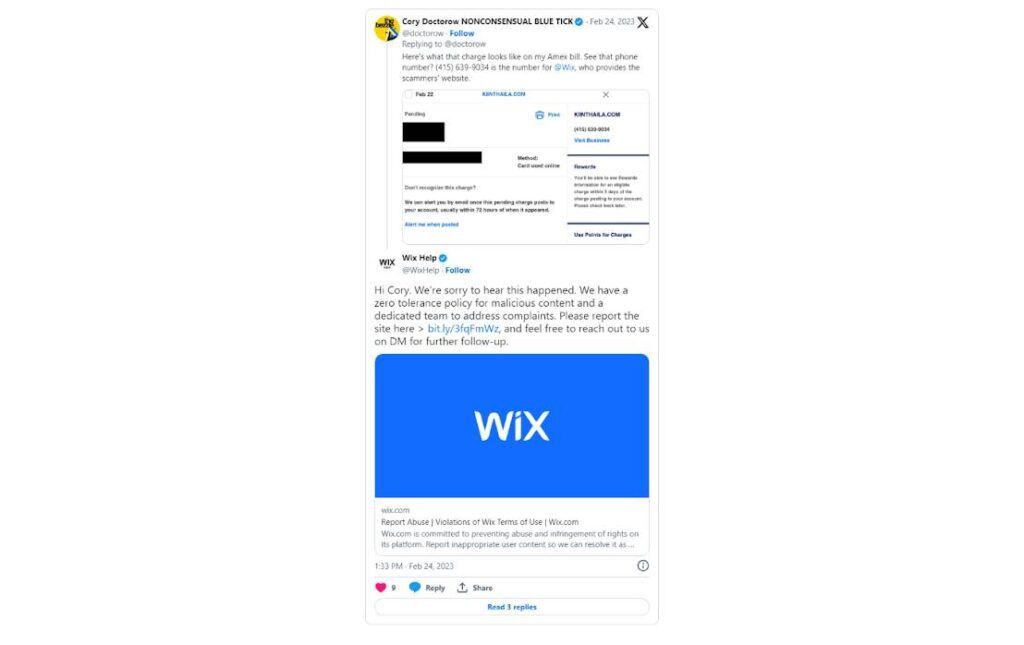
A screenshot of a facebook post that says wix on it.

8. Real-Time Insights 


Besides providing responsive customer service, social media helps you track customer interactions. It’s a goldmine of information. What do they like? What do they hate? Is your customer service working? Are they happy with it? How many people saw your post? How many clicked? 


Social media provides real-time insights to see what’s working and what’s not. This information helps you fine-tune your social media strategy and ensure it hits the mark. 


9. Generating Leads and Conversions


Social media offers an interactive environment where users can engage with your content. This creates plenty of opportunities for you to get the conversation going. For example, when followers comment on your post, you can leave a quick “thank you.” This simple exchange goes a long way in showing that you value their input. 


Your social media strategy can include engaging in discussions related to your industry or niche. You can share relevant content from other sources, start discussions on trending topics, and comment on user-generated or other content. 


One more way to engage your target audience is to create polls, quizzes, contests, live streams, and interactive stories. This type of content encourages your would-be customers to interact with your business. This conversation can lead to increased brand awareness and sales. 


10. Improved Customer Loyalty and Retention 


Social media isn’t just about generating leads. It also helps you retain customers and build a community. With regular updates, special offers, and engagement, your customers keep coming back for more. It’s like saying, “We’re glad you’re here,” without actually saying it.

This constant engagement gradually helps you build an online community. This is the space where your customers interact with each other and advocate for your brand. It’s a powerful aspect of your social media strategy because it’s your online word of mouth. The more people advocate for your brand, the more leads you will get.


11. Reputation Management


The last thing you want for your business is to go viral for the wrong reasons. When your business faces a crisis, social media lets you react fast. Whether addressing negative feedback, complaints, or a PR crisis, a quick, coordinated response can douse the fire before it’s too late.


A clear social media marketing strategy allows you to control the narrative. It offers a transparent and authentic platform to share your message. But more importantly, being open and honest helps you strengthen the bond with your customers during a crisis. 

By actively engaging with their concerns, you can prevent rumors from spreading. This helps keep the hard-earned reputation of your brand intact. 


12. Cost Effective Marketing


A social media marketing strategy is a bargain compared to traditional marketing. The average ROI for social media ad campaigns is around 250%. Plus, you can easily monitor the progress and impact of your campaigns through real-time insights. That means you spend money only where it counts.


Social media can be a godsend, especially for small HVAC and other businesses with limited marketing budgets. You can open a social media account for free. Once your social media strategy is in place, you can decide the budget for your ad spend and paid promotions. 

But above all, it allows you to compete with the big boys in your niche. It helps you build a following, acquire natural links, and boost your online presence. No other platform can help small guys like you to compete with leading brands in their niche. 


How to Measure the Success of Your Social Media Marketing Strategy


Although social media marketing boasts a high ROI, 83% of marketers say it’s difficult to measure. But if you are creative and resourceful, you can measure the success of your social media marketing strategy. Here are five key performance indicators (KPIs) that will help. 


1. Engagement


Most social media platforms have engagement metrics, such as likes, comments, and shares. High likes, comments, and shares indicate that your target audience likes your content. Analyzing this metric helps you understand what your target audience likes or dislikes. You can tailor our social media strategy based on this information.


2. Reach and Impressions


While reach tells you the number of unique users who see your content, impressions tell how frequently your content was viewed. As both metrics tell you different things about the performance of your content, you need to measure both.


However, each platform has a different measure and definition of reach and impressions. Some platforms, like X (formerly Twitter), have only one metric. You will need to drill down into their insights to see which metric you can track.


But the bottom line is – whether it’s reach or impressions – an increasing number shows that your content is getting traction.


3. The Number of Followers


Growing number of followers is another direct measure of a successful social media marketing strategy. Check all your social media accounts regularly to see how fast your followers are growing. Usually, you should see a steady increase over time.


4. Click-Through Rate (CTR)


Generally, a higher CTR indicates a successful social media marketing strategy. It measures how effectively your content encourages users to click an ad and take the desired action. 


The formula for CTR is:


CTR = (clicks/impressions) x 100


CTR can be different for different social media platforms, industries, and target audiences. For example, Facebook ads have a CTR of 1.11%, while Instagram has only 0.22%.


5. Conversion Rate


Conversion rate is the most critical KPI. It measures the percentage of users who complete a desired action. This could be anything like buying a product, downloading an eBook, or registering for your newsletter.


The formula for the conversion rate is:


Conversion rate = (number of conversions/ total number of visitors) x 100


For example, if your Facebook account had 1000 visitors last month and received 10 orders, the conversion rate would be:


Conversion rate = (10/1000) x 100

Conversion rate = 1%


As you can see, the higher the conversion rate, the more successful your strategy is.


Conclusion 


Social media is a powerful marketing tool. It puts you directly in front of millions of existing and potential clients. Nothing can increase your brand visibility like social media. It’s your gateway to more leads, conversions, and meaningful engagement. And putting a social media marketing strategy is highly cost-effective because of its high ROI. In short – social media presence is non-negotiable in today’s digital era. So, the sooner you do it, the better.


Reach out to All Contractor Marketing® for all your social media marketing needs. Our experts can help you create a strategy tailored to your needs. Contact us today to get started!
By Chris Smith March 14, 2026
How HVAC Companies Can Build an AI-Driven Marketing Strategy That Works In 2026, HVAC customers are not just finding contractors through traditional search alone—they are comparing reviews, checking directories, browsing maps, and increasingly relying on AI-driven tools to decide who to trust At All Contractor Marketing, we specialize in HVAC marketing, so we understand how these changes are reshaping the way contractors get discovered, evaluated, and chosen online. AI is not just another trend for this industry; when applied strategically, it helps HVAC companies improve visibility, strengthen trust, automate key marketing tasks, and make smarter decisions that lead to more booked jobs. Here’s how an AI-driven marketing strategy works and why ACM is uniquely positioned to help HVAC companies use it effectively. What Is an AI Marketing Strategy for HVAC? An AI marketing strategy uses smart technology to: Understand how potential customers find your HVAC business online Monitor your reputation across platforms (search engines, maps, reviews, etc.) Automate repetitive tasks like review responses, posting content, and message replies Enable faster decision-making based on real customer data This is not about replacing your team — it’s about amplifying what you already do well by letting AI handle the heavy lifting. Why HVAC Contractors Need AI in Their Marketing Here’s how AI can make a noticeable difference in your HVAC business: 1. Get Found More Easily Online Customers discover HVAC services in many places — Google, Yelp, Facebook, Maps, and AI chat tools. AI helps you understand where your customers start their search and ensures your business shows up in the right places. Keeping your listings accurate and updated across platforms increases visibility and leads. 🔑 Tip: Consistent business information (hours, services, contact info) across directories improves search rankings and builds trust with customers. 2. Build Online Trust With Better Reviews Online reviews are one of the biggest deciding factors for homeowners choosing an HVAC contractor. AI can help you: Collect more reviews by prompting satisfied customers Respond to reviews quickly and professionally Spot trends or issues in customer feedback Positive reviews and timely responses boost search visibility and help convert more visitors into booked jobs. 3. Automate Repetitive Marketing Tasks AI tools take over time-consuming tasks like social scheduling, review monitoring, and performance reporting. That means your team can focus on customer service and field operations while AI handles routine work behind the scenes. Examples of automation: AI-generated social posts sharing seasonal HVAC tips Auto-responses to customer messages after business hours Alerts when a review needs attention 4. Make Data-Driven Decisions AI analyzes customer interactions and behavior across multiple platforms. This gives you real insights into: Which marketing channels are driving calls What keywords customers use to find you Where demand is growing or slowing With this intelligence, you can invest your marketing budget smarter and scale activities that work. How to Build Your AI-Powered HVAC Marketing Strategy Here’s a practical framework HVAC companies can use to start seeing results: 1. Audit Your Current Marketing Begin by looking at what you already have: Your website performance Search rankings Review volume and sentiment Social engagement metrics This audit shows where AI can boost results the most. 2. Set Clear, Measurable Goals Don’t adopt AI just because it’s trending. Set specific goals such as: Increase booked service calls by X% Grow online review count Reduce time to respond to leads Clear goals help you track progress and prove ROI. 3. Choose the Right AI Tools AI marketing tools should: Integrate with your website and CRM Help with SEO and content creation Improve customer engagement Automate tasks without losing brand voice Start simple and scale up as you see results. 4. Train Your Team AI is most effective when your team knows how to use it. Provide training so everyone understands: What the tools do How to interpret AI insights When to step in manually 5. Monitor and Adjust Continuously monitor results and make adjustments. AI can surface trends and opportunities that help you stay ahead of competition — but you still need to guide it with strategy and oversight. Final Thoughts AI is transforming HVAC marketing, but results do not come from using random tools or chasing trends; they come from applying the right strategy to the right parts of your business. The contractors who benefit most from AI are the ones using it to improve visibility, reputation, response speed, and marketing performance in ways that actually generate more leads and booked jobs. That is where All Contractor Marketing stands apart. HVAC marketing is our specialty, and we understand how to turn emerging tools like AI into practical growth strategies that support real business results. If you want expert help building an AI-powered marketing strategy that helps your HVAC company get found, earn trust, and win more customers in 2026, ACM is the team to contact.
By Chris Smith March 7, 2026
HVAC Website Service Area Pages: How to Rank Higher and Get More Local Leads If your HVAC business serves multiple cities or communities, generic website pages are not enough to help you rank where your ideal customers are actually searching. At All Contractor Marketing, we specialize in HVAC marketing, so we know that well-built service area pages are often the missing link between getting found online and consistently generating qualified local leads. The contractors who win in local SEO are not relying on broad service pages alone; they are building localized content that helps Google connect their services to the exact markets they want to dominate. Here’s why HVAC service area pages matter and how ACM helps contractors use them to increase visibility, trust, and booked jobs. What Are Service Area Pages? A service area page is a webpage designed to connect your HVAC offerings with a specific geographic area. Instead of just listing a broad service area on a single page, you create unique pages for each city, town, or region you work in. For example: “HVAC Repair in Marietta, GA” “AC Installation in Woodstock, GA” “Furnace Maintenance in Canton, GA” These pages let search engines match your services to local search queries like “AC repair near Woodstock” or “furnace service in Marietta.” Why Service Area Pages Matter for HVAC SEO Rank for More Local Searches If you only have one generic service page, Google may not show your business for specific local searches—even if you serve that area. Creating targeted pages helps you appear in searches tailored to each city or neighborhood you cover. Better Relevance for Prospects Customers tend to click on results that clearly mention their city or community. When someone sees “AC Tune-Ups in Smyrna” on your page title and content, they instantly know you serve their neighborhood. This relevance improves both rankings and conversion rates. Expanded Visibility Without Physical Locations Many HVAC contractors work from a central office but travel throughout a metro area. Service area pages let you establish a digital presence in each service zone you cover, even without separate physical locations there. Key Elements of Effective HVAC Service Area Pages Here’s what every HVAC service area page should include to boost local SEO and help drive leads: Clear, Localized Headline Start with an H1 that includes the service and location, like: Heating and Air Conditioning Services in Alpharetta, GA This tells both users and search engines exactly what the page is about. Customized Content for Each Area Avoid duplicating the same text across different pages with only the city name changed. Instead: Discuss common HVAC challenges in that climate Mention local weather patterns (humidity, winter cold, summer heat) Add references to landmarks or neighborhoods that locals recognize This signals to Google that your content is unique and relevant for that location. Detailed Service Descriptions List all HVAC services you offer in that specific area: AC repair and installation Furnace tune-ups Heat pump servicing Indoor air quality solutions Clear bullet points help both search engines and readers scan what you provide. Strong Calls-to-Action Encourage visitors to take the next step: “Call now for HVAC service in [City]” “Schedule your AC tune-up today” “Request a quote for furnace installation” Include click-to-call buttons on mobile to make contacting you effortless. Local Reviews and Testimonials Social proof matters. Feature reviews from customers in each service area to build trust and show real experience in that community. Internal Links Link from your location pages back to core service pages (like Residential HVAC or Commercial HVAC) to help with site structure and SEO flow. Best Practices and Pitfalls to Avoid Don’t Duplicate Content Pages that only swap out city names look spammy to search engines. Each page should include genuinely distinct content tailored to the area. Focus on Major Service Areas Avoid creating dozens of pages for tiny or overlapping zones. Focus on the communities that actually drive business to you. Keep Pages Updated SEO isn’t “set it and forget it.” Update your service area pages with fresh customer photos, new testimonials, or seasonal HVAC tips to keep them performing well. Wrap-Up: Boost Your Local HVAC Leads Service area pages are one of the most important SEO assets an HVAC company can build when it wants to rank in more local markets and turn search visibility into real leads. But getting results takes more than publishing a list of city pages; it requires localized strategy, unique content, smart site structure, and a clear understanding of how homeowners search for HVAC services. That is where All Contractor Marketing stands apart. HVAC marketing is our specialty, and we know how to build service area page strategies that help contractors rank higher, earn more trust, and generate more booked jobs from the areas that matter most.  If you want expert help strengthening your HVAC SEO, ACM is the team to contact.
By Chris Smith February 28, 2026
How Direct Mail Can Supercharge Your HVAC Marketing In a marketing world full of digital ads, social media, and AI-driven tools, many HVAC companies wonder whether direct mail still deserves a place in their strategy. At All Contractor Marketing, we work specifically with HVAC businesses, so we know firsthand that direct mail can still be one of the most effective ways to generate awareness, build trust, and drive booked jobs when it is targeted, timed, and backed by the right strategy. The contractors seeing the best results are not guessing; they are using proven HVAC marketing methods that connect with homeowners where real buying decisions happen. Here’s why direct mail still works in 2026 and how ACM helps HVAC companies use it more effectively. What Is Direct Mail Marketing? Direct mail marketing is simply sending printed marketing materials — like postcards, flyers, or letters — directly to a person’s physical address through postal services. These mail pieces can be highly targeted based on neighborhood, homeowner demographics, past service history, or seasonal needs. For HVAC businesses, that means your message lands where decisions about home comfort and repairs are made — right in front of potential customers without the distraction of digital noise. Why It Works for HVAC Companies Here’s what makes direct mail especially powerful for service-based businesses like HVAC: Tangible Presence: Physical mail stays in the home longer than a fleeting email or ad. Homeowners can hold it, set it aside, and refer back to it when they’re ready to book service. Higher Engagement Direct mail often gets higher open and response rates than digital channels. It cuts through inbox clutter and speaks directly to the homeowner — especially important when someone is looking for reliable HVAC help. Targeted Reach You can choose exactly where your mailpieces go — for example, targeting neighborhoods with older homes that might need system replacements, or new neighborhoods where residents are more likely to need maintenance services. Boosts Other Channels Direct mail doesn’t have to stand alone. Including QR codes or personalized URLs can drive recipients to your website, landing pages, or special offers, creating a seamless offline-to-online experience. Direct Mail Formats That Work for HVAC There’s no one-size-fits-all direct mail piece. HVAC companies often choose from formats like: Postcards Highly visual and cost-effective, postcards are perfect for seasonal reminders (like fall tune-ups or summer AC checks). Letters and Envelopes These feel more personal and can be great for exclusive offers, loyalty programs, or welcome messages to new homeowners. Seasonal Flyers or Brochures Provide more space to explain service plans, promotions, or benefits of preventive maintenance. HVAC-Specific Direct Mail Ideas Here are some targeted mail campaign examples that have worked in the field: New Homeowner Welcome Postcards Introduce your HVAC business to new residents in your service area with a special discount offer or maintenance package. Seasonal Promotion Cards Send postcards reminding customers to schedule their AC check before summer or furnace tune-ups before winter. Service Reminder Mailers Target past customers with reminders about annual maintenance — a helpful nudge that keeps your services top of mind. Referral Incentive Flyers Encourage word-of-mouth by offering discounts or credits for referrals. Existing customers love deals and will share with neighbors. Best Practices for HVAC Direct Mail Success To get the most out of your direct mail marketing: Define Clear Goals Know what you want your mailers to accomplish — new leads, repeat calls, or service bookings — and craft your message around that. Use Targeted Lists Mailing broadly can waste budget. Instead, focus on lists that match your ideal customers — homeowners likely to book HVAC services. Include a Strong Call-to-Action Tell the reader exactly what to do next — call for a quote, schedule a tune-up, or visit a special landing page via a QR code. Track Your Results Use unique promo codes, QR codes, or trackable phone numbers so you can measure which mailers generate calls and bookings. Final Thoughts Direct mail is not outdated for HVAC companies in 2026—it is still a powerful way to stay visible, build brand recognition, and drive service calls when used strategically.  The key is knowing who to target, what message to send, when to send it, and how to connect it to the rest of your marketing so it produces measurable results. That is where All Contractor Marketing stands apart. HVAC marketing is our specialty, and we understand how to build direct mail campaigns that work alongside digital strategy to help contractors generate more leads and book more jobs. If you want expert guidance on using direct mail to grow your HVAC business, ACM is the team to contact.