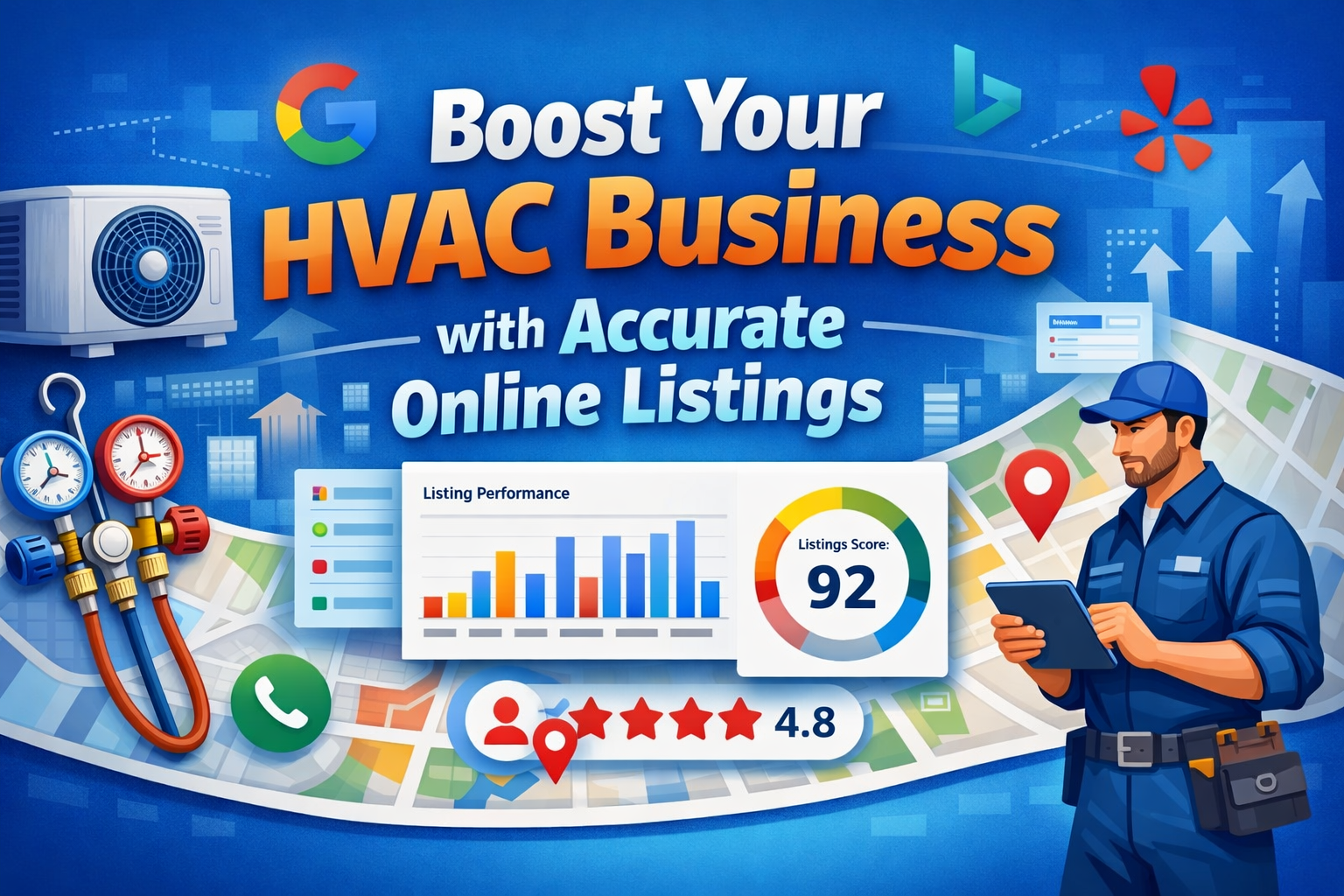
How to Dominate Google Maps in Your Service Area

Melissa Hardman • February 7, 2026

How HVAC Companies Can Dominate Google Maps


In today’s digital world, homeowners searching for heating, ventilation, and air conditioning services almost always start with a location-based search like “HVAC near me” or “AC repair in [city].” If your company isn’t showing up in those critical Google Maps results, you’re losing calls, leads, and revenue to competitors.


Google Maps SEO isn’t just about being listed — it’s about ranking near the top of the map results so potential customers see your business first. Here’s how HVAC contractors can make that happen in 2026.


Why Google Maps Matters for HVAC Businesses


Google Maps isn’t just a navigation tool — it’s a discovery engine for local services. When someone searches for HVAC help in your area, the local “map pack” (the top three businesses that appear with a map) gets the majority of the clicks. Appearing there means more phone calls, direction requests, and inquiries — often from homeowners ready to buy or book a service now.


A properly optimized Google presence can dramatically increase leads without ongoing ad spend, making local SEO one of the most cost-effective marketing investments for HVAC companies large and small.


Key Strategies for HVAC Google Maps SEO Success


1. Claim and Complete Your Google Business Profile


Your Google Business Profile (formerly Google My Business) is the foundation of Maps SEO. Ensure you’ve:

• Claimed your listing
• Verified ownership
• Completed every field accurately — name, address, phone, hours, services offered, and business description


This helps Google understand exactly what you do and when you operate, increasing your chance of showing up for relevant searches.


2. Use Service-Specific Keywords


In your business description and services section, include phrases that reflect real HVAC search queries like:

• “AC repair in [City]”
• “Furnace installation near me”
• “Emergency HVAC services”


These help Google match your profile to homeowner search intent.


3. Keep Your Info Consistent Everywhere


Google uses your Name, Address, and Phone (NAP) data to verify your business. Inconsistent listings across directories can confuse search engines and hurt rankings.


Make sure your contact info is identical everywhere online — including your website, local directories, and social profiles.


4. Collect More Google Reviews


Reviews influence both your ranking and whether homeowners choose your business. Encourage customers after service calls to leave honest feedback, and always respond — especially to negative reviews. A higher volume of recent reviews shows activity and trustworthiness to Google and future customers alike.


5. Add Quality Photos and Updates


Adding real photos of your team, trucks, completed jobs, and office space makes your listing more engaging and credible. Regular posts or updates about discounts, seasonal tune-ups, or promotions also signal to Google that your business is active and relevant.


6. Use Local Landing Pages on Your Website


Link your Google Business Profile to local landing pages on your website that target your service areas. For example, “HVAC Services in Marietta, GA” pages can reinforce location signals and improve visibility for nearby searches.


7. Monitor Performance and Adjust


Track key metrics such as:

• How often you appear in searches
• Clicks to your website
• Calls from Google Maps
• Review trends


This data helps you refine your local SEO strategy over time and double down on what’s working.


Final Thoughts


Ranking high on Google Maps isn’t optional for HVAC companies in 2026 — it’s essential. With strategic optimization of your Google Business Profile, consistent listings, targeted keywords, and active reputation management, your company can attract more local customers and grow service calls month after month.


Local search performance builds over time, so start now — and make sure potential customers find you first. 
By Melissa Hardman February 14, 2026
Answer Engine Optimization for HVAC Contractors: How to Get Found in AI Search in 2026 The way people search for HVAC services is changing fast. Today’s homeowners aren’t just typing keywords into Google — they’re asking conversational questions like “How often should I service my AC?” or “Best furnace repair near me” through voice assistants and AI tools. To meet this shift, HVAC businesses need a strategy that goes beyond traditional SEO. That’s where Answer Engine Optimization (AEO) comes in. What Is Answer Engine Optimization (AEO)? AEO is the practice of shaping your online content so that AI systems and voice search tools can easily understand, interpret, and present it as a direct answer to user queries. Unlike standard SEO — which focuses on ranking pages in search engine result lists — AEO is about becoming the answer that AI assistants and answer boxes pull when a homeowner asks a question. For HVAC businesses, this means structuring content to clearly answer common questions like: “Why is my air conditioner freezing up?” “What size HVAC system do I need for a 2000 sq ft home?” “How much does furnace installation cost in 2026?” When content directly answers these types of queries, AI search tools like Google’s AI Overviews, Siri, Alexa, or ChatGPT are more likely to surface your business as a recommended solution. Why AEO Matters for HVAC Businesses The digital landscape is shifting toward zero-click answers and conversational search. That means many users get the solutions they need without clicking through to a website. For HVAC contractors, this shift presents both a challenge and an opportunity: Be the first answer consumers see If your content is formatted for AI interpretation, you can show up in featured snippets, voice answers, and direct responses — often before traditional search rankings. Reach customers with high purchase intent Homeowners asking specific HVAC questions are likely closer to booking a service or purchasing a system. Answering their questions clearly improves the chance they choose your business. Build trust and authority Providing accurate, helpful answers positions your HVAC brand as a knowledgeable professional in your market. AEO vs Traditional SEO Traditional SEO Ranks pages based on keywords and links Focused on search results pages Metrics like clicks and traffic matter Good for general discovery Answer Engine Optimization Gets quoted as the direct answer by AI and voice tools Focused on featured snippets and conversational results Visibility in AI answers and voice search ranking Great for specific homeowner questions In short, SEO helps your website appear higher in listings. AEO helps your business be the answer customers see first. How HVAC Companies Can Optimize for AEO Here are practical steps HVAC businesses can take today to improve their Answer Engine Optimization: 1) Talk like real people Answer engines favor conversational language because it matches how users ask questions. Write in the way someone would speak aloud (“How often should I change my HVAC filter?”) rather than just targeting short keywords. 2) Use clear headings and question-based content Structure your pages with question formats (e.g., What causes an AC to leak water?), followed by concise, direct answers. This layout helps AI systems pick out the answer quickly. 3) Add FAQ and HowTo schema Schema markup gives search engines and AI tools explicit clues about your content. Adding FAQ schema to your FAQ pages or HowTo schema to instructional posts makes your content more machine-readable and increases the chances of appearing in featured answers. 4) Focus on voice search queries Voice search queries tend to be longer and more specific. Optimize content to match these longer, natural sentences. For example: “What is the average lifespan of a heat pump?” rather than just “heat pump lifespan.” 5) Track and update performance Unlike SEO where rankings are well defined, AEO success is measured by being shown in AI answers, voice responses, and rich results. Regularly review your performance on these fronts and refine based on what questions your customers ask most. Conclusion Answer Engine Optimization is quickly becoming essential for HVAC companies that want to stay competitive in an AI-driven search world. By aligning your content with how modern users phrase questions and how AI tools interpret answers, you can become the go-to source for homeowners seeking HVAC expertise online.  Being the answer — not just another link — builds trust, improves visibility, and ultimately drives more high-intent leads to your business.
By Melissa Hardman January 31, 2026
How AI Ads Could Change the Way HVAC Pros Get Found Online In a major shift for how AI tools operate, OpenAI has started testing advertisements inside ChatGPT for some users in the U.S. Instead of keeping its AI completely ad-free, the company is now experimenting with sponsored listings that show up alongside chatbot responses. While this may seem like tech-industry news far removed from heating and cooling services, it matters a lot for HVAC businesses thinking about future marketing strategies. What’s Happening With Ads in ChatGPT OpenAI has begun rolling out ads for users on the Free and ChatGPT Go tiers — a lower-cost subscription — in the United States. These ads are placed below the AI’s generated replies and clearly labeled as sponsored content. Importantly: Paid subscribers (Plus, Pro, Business, Enterprise, and Education) won’t see ads. The system is designed so ads don’t influence the AI’s actual answers or recommendations. Ads are matched to the context of the conversation, meaning relevance is a priority. Why This Matters for HVAC Businesses ChatGPT and other conversational AI tools are increasingly part of how customers research local services and solutions — including home comfort, equipment recommendations, repair advice, and maintenance tips. Here’s why the introduction of ads could matter for HVAC contractors: 1. New Advertising Space With High-Intent Users People asking an AI for help with heating or cooling problems are already thinking about solutions. Placing your HVAC service in that context could mean reaching users earlier in their decision process. 2. Contextual Targeting Beats Traditional Display Ads Instead of targeting users based on search queries or demographics alone, AI ads could match your message to what someone is talking about — for example, furnace repair tips or when to replace an AC unit. 3. Opportunity for Small Businesses to Be Seen Early stages of this ad testing could give local HVAC businesses a chance to show up in a new kind of online real estate before it gets crowded. As the platform matures, competitive bids could make this space more expensive, just like Google Ads or social media ads. A Strategic Shift in How AI Could Drive Leads This isn’t just about inserting ads into a chat interface. It signals a broader trend where conversational AI becomes a marketing channel in its own right. AI tools are no longer only for answering questions — they’re becoming spaces where brands can interact with customers at key moments in their journey. For HVAC pros, that means: Staying aware of emerging digital advertising platforms Considering how your business could fit into conversational contexts where customers ask about HVAC services Experimenting early to understand what resonates in an AI-driven environment Looking Ahead AI-powered assistance tools are rapidly becoming part of everyday search and decision-making. As ads begin to appear in these conversations, HVAC businesses have an opportunity to engage potential customers in new ways that blend helpful advice with service offerings.  Even if you’re not ready to advertise on AI platforms now, it’s smart to keep an eye on how these spaces evolve. The future of HVAC marketing won’t just live on traditional search engines — it may be powered by the next generation of conversational technology.
By Melissa Hardman January 24, 2026
How to Optimize Your HVAC Company Website Without Keyword Stuffing When it comes to getting your HVAC business found online, the goal isn’t to cram as many keywords into your pages as possible. That outdated tactic, known as keyword stuffing , does more harm than good — both for your search rankings and for user experience. Modern search engines like Google are far better at understanding content context and meaning than mere repetition of terms. Here’s how to optimize your HVAC website in a smart, sustainable way that drives leads and boosts visibility — without resorting to keyword stuffing. Understand What Not to Do: Why Keyword Stuffing Fails Keyword stuffing is when you try to manipulate search engines by placing your target phrases unnaturally throughout a page — for example repeating “HVAC repair” multiple times in every paragraph. This can make your copy awkward to read, and Google can penalize that type of content because it prioritizes quality and helpfulness. Instead, focus on writing for people first and search engines second . 1) Write for People, Not Search Engines Your primary goal when writing website copy or blog posts should be to answer real questions that your customers are asking. Whether it’s explaining the benefits of routine maintenance, how to choose the right HVAC system, or what to expect during an installation, helpful content builds trust. Useful content keeps visitors on your site longer — a strong signal to search engines that your page is valuable — and helps convert them into paying customers. 2) Use Keywords Naturally Keywords are still useful because they signal to search engines what your page is about. But they should be woven naturally into: Page titles Headings Meta descriptions Service page copy Blogs Alt text for images Rather than repeating the same phrase over and over, use variations and synonyms that reflect how customers search and read. For example: HVAC maintenance in [City] furnace tune-up services AC repair and replacement heating system service This helps search engines understand your topic without feeling like you’re forcing terms into your content. 3) Organize Content Around Topics, Not Just Keywords Instead of obsessing over how many times a word appears on a page, structure your content around topics homeowners care about. For example: Service Pages Create dedicated pages for each HVAC service you offer — such as: Air conditioning repair Furnace installation Indoor air quality solutions Preventive maintenance Each page should clearly explain the service and benefits instead of focusing on repeating a phrase. Blog Topics Blog posts are perfect for answering common questions and targeting related searches such as: “When should I schedule HVAC maintenance?” “How to improve indoor air quality in winter” “Signs your AC needs repair” Helpful blogs build topical relevance and can attract more organic traffic. 4) Focus on Local SEO Most of your customers are local, so your SEO strategy should reflect that. Include location information organically in your content — like mentioning the cities or service areas you operate in — rather than stacking terms like “HVAC company [City] HVAC contractor [City] HVAC services [City]” repeatedly. You can also: Optimize your Google Business Profile Ensure your NAP (Name, Address, Phone) is consistent across listings Encourage customer reviews Local intent helps search engines connect your business with nearby people searching for HVAC services. 5) Improve UX and Technical SEO Too SEO isn’t just about words on a page. Search engines also look at overall website performance and usability. Make sure your site: Loads quickly Is mobile-friendly Uses clear navigation Has clean URLs and fast hosting These factors affect search rankings and help visitors find what they need quickly. 6) Monitor and Adjust SEO is ongoing. Use tools like Google Search Console and analytics to: See what keywords are driving traffic Track what pages rank well Identify content that needs updating Regular reviews help refine your site strategy without resorting to old practices like keyword stuffing. Final Thoughts Keyword stuffing is a thing of the past. Today’s SEO rewards content that is clear, helpful, and user-focused — especially for local service businesses like HVAC companies. By writing naturally, addressing real homeowner questions, and optimizing strategically, you can boost your visibility online and grow your business without sacrificing quality.  Start by auditing your existing content for readability and usefulness, focus on topic relevance rather than repetition, and always write with your audience in mind. Your customers — and search engines — will thank you.