Is Television Advertising Still Relevant for Contractors?

Michele Smith • January 13, 2023

TikTok, Instagram, Facebook, Google… with a plethora of digital places to advertise, many contractors are wondering, Is TV advertising still effective today?”


If you’re in that boat, we don’t blame you – but we’ve got some news. Television advertisements are far from dead, especially for local businesses.


In fact, it’s estimated that global television advertising revenue is forecasted to recover to pre-pandemic amounts. Additionally, 67% of brands are planning to increase their spending on advanced or connected TV spending.


Even in the wake of modern social and digital technology, there’s still a relevant place for TV commercials. Even one strategically run ad can make an enormous difference for trade businesses – including HVAC technicians, plumbers, electricians, and other contractors.


Not convinced? Let us share some of the key advantages of television advertising, specifically for contractor businesses.


1. Reach a Large Audience


Television advertising has one specific (but grand) purpose: to deliver your marketing message to the general public. This is why TV marketing is often referred to as “mass advertising.” You’re not pinpointing a narrow section of social users or searchers, but instead casting a wide net.


The global television market is expected to surpass 1.8 billion households by 2026. No matter what area you service or which kind of trade you specialize in, people will see your commercials.


That’s the whole point, and one of the reasons TV is still widely considered to be an effective advertising medium.


Additionally, TV’s audience isn’t just large in numbers, but in diversity. Unlike some forms of social media, which tend to mostly target young adults and teens, television is a medium enjoyed by everyone.


The thing is, most trade service providers benefit immensely from targeting a large (but local) audience. Everyone needs to know a great contractor for plumbing or HVAC, so why not get your name in front of the biggest audience possible?


2. Maximize Your Ad Budget


In comparison to some advertising mediums, TV advertising is relatively affordable. This makes it especially enticing to small local businesses with restricted marketing budgets.


For most local television ads, businesses can expect to pay as low as $5 per 1,000 views in an average-sized market (for a 30-second ad slot). Generally, you’ll want to budget around $5,000 to reach a million viewers.


In comparison, online banner ads typically cost about $5,000 per 500,000 impressions – possibly half the reach of a strategically placed TV advertisement.


National TV ads, of course, cost substantially more – although it depends on what channel or show you want your commercial to air with. The more popular the slot, the more you’ll pay to place your advertisement.


The bottom line is that you might not be able to afford to advertise during an NFL game, but most contractors can afford to advertise in key local markets with broadcast television. To learn more about the cost of television advertising in your area, speak with a marketing team experienced in contractor advertising.


3. Establish Trust With Viewers


There’s something about seeing a brand on TV that makes consumers want to trust it. When your plumbing business or HVAC team has a presence on television, people are more likely to recognize your company as legitimate.


Furthermore, TV marketing can help people better understand your trade business and what it does. You can even demonstrate your services, showing them what it looks like when you replace a washer or handle dangerous wiring. This instills a sense of credibility in your services (and makes people more likely to reach out when they need help).


In a 2022 study conducted by Effectv, 188 participants were surveyed. The results indicated that participants who viewed ads in the TV environment showed a higher “brand attitude” – specifically when it came to lesser-known brands, not big chains or easily recognizable companies.


In other words, if you want people to feel good about trusting your contracting business, you might want to get your TV advertisement out there. It could very well result in more brand trust and a lift in purchase intent.


4. Garner Measurable Results


Are you wondering, But how will I know if people actually see my TV ad? Don’t worry – there are ways to obtain data on view counts and the overall success of your advertising.


Traditionally, viewership (how many people have seen your ad) is the predominant form of measurement. However, we don’t recommend stopping once you obtain that number – not every viewer actually engaged with your brand or converted, so to understand the true ROI of your TV advertisement, you’ll need to dig deeper.


There are a few ways to garner measurable results when advertising on TV:


  • Pay attention to your website traffic right after your ad runs. Does it spike? Are people being driven to engage with your content in the wake of seeing your ad?
  • Survey your customers. Did they find you because of your television ad?
  • Use a unique phone number. Many contractors choose to feature a specific number on the television ad. This allows them to easily track how many calls are coming in from viewers who saw the advertisement.


If you feel overwhelmed by monitoring the success of your television advertisement, consider letting a marketing firm do the job for you. They’ll know how to determine your true ROI, then make changes along the way to improve the ad’s effectiveness.


5. Work in Tandem With Your Digital Ads


Lastly, we want to explain that advertising on television should be used in conjunction with digital marketing mediums. We’re not saying to give up on your social media ads or SEO strategies. Instead, we’re staying to make them work together.


In fact, achieving synergy between traditional and digital advertising is one of the best things any local business can do. 


In that same Effectv study we referenced earlier, researchers found that TV advertising can actually help enhance other advertising mediums due to its high attention and engagement, which drives recall. Unaided recall fell around 45% for viewers who saw TV and digital ads, versus 20% for those who were only exposed to two digital mobile ads.


It’s simple, really: when one of your potential customers sees a mobile ad, then repeats that cognitive attention while seeing a television ad, you’re establishing a strong connection. If you saw just one social media ad, you might quickly forget it… but if you’re seeing the same contractor’s name multiple times in multiple mediums, you’re more likely to recall it.


Interested in Advertising Your Contracting Business on TV?


At All Contractor Marketing®, we’ve been in the contractor advertising game for a long time – and we’ve seen the powerful impact of television when it comes to establishing local businesses as household names.


We assist with placement, timing, and repetition to reap the highest reward for your television ad cost. Our team doesn’t just create TV ads – we ensure they’re worthwhile and effective for your contracting business.


Ready to see what TV advertising can do for you? Reach out online to discuss your contractor advertising initiatives.
By Chris Smith March 28, 2026
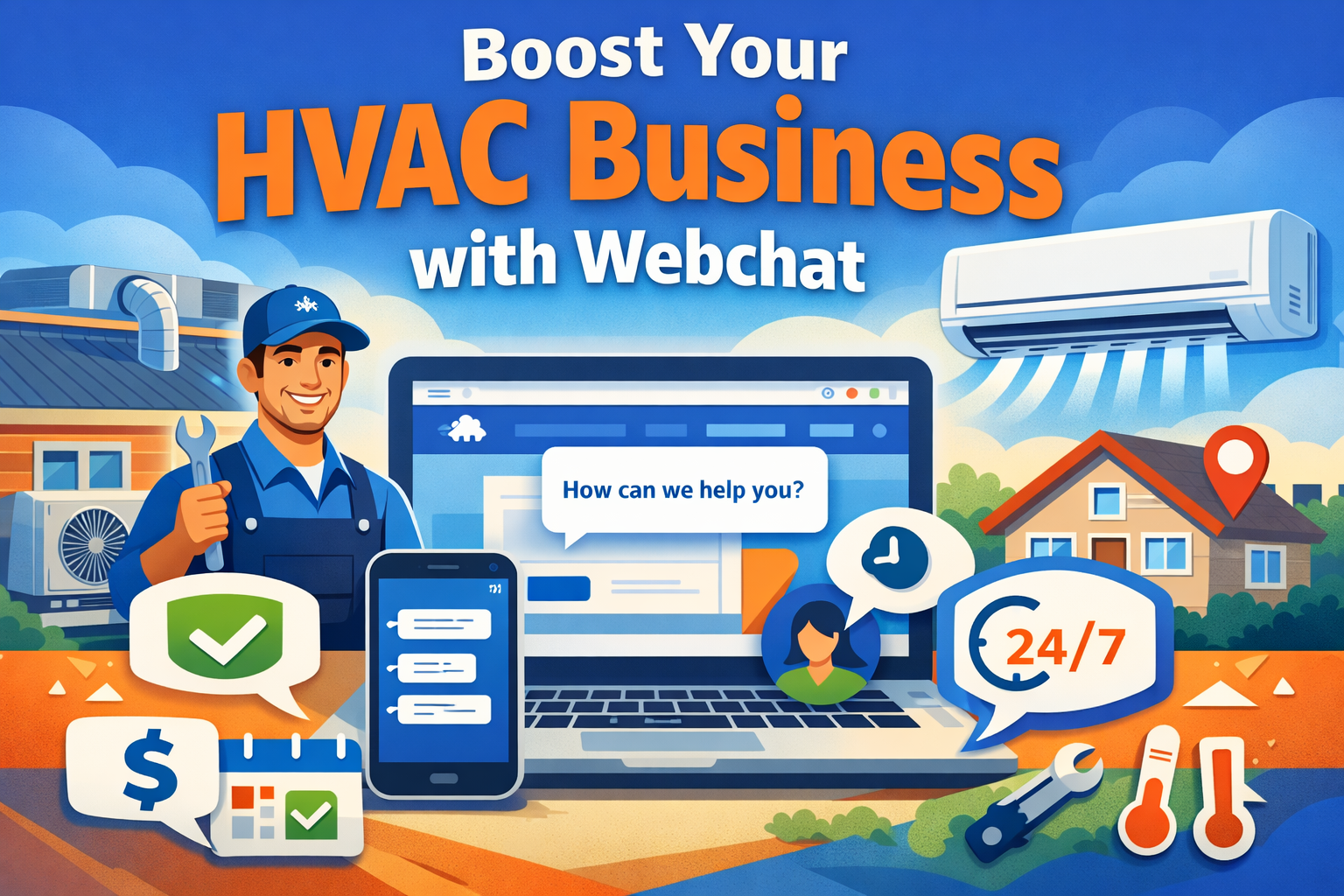
Why Your HVAC Business Needs Webchat on Your Website In today’s digital world, homeowners expect instant answers. When someone lands on your HVAC service website, they want fast responses — whether it’s a question about a repair, availability, or pricing. One of the most effective ways to meet that expectation is by adding a webchat widget to your site. Webchat lets visitors start a conversation immediately without calling or filling out a form. For HVAC companies that rely on quick conversions and strong customer service, this tool can have a big impact. Below, we explain what webchat is, how it works for an HVAC business, and why it’s an essential part of your customer engagement strategy. What Is Webchat? Webchat is a small chat box embedded directly into your HVAC website. When a visitor has a question, they can click the chat window and start a conversation. This can be done via: Live chat when someone on your team is online Automated chatbot responses when no one is available to answer immediately Unlike traditional contact forms, webchat captures interest in real time — meaning you can connect with leads while they’re still actively looking for help. How Webchat Benefits Your HVAC Business Capture More Leads Many potential customers won’t fill out a form or make a phone call if they have to wait. Webchat changes that by enabling visitors to reach out instantly. This reduces friction and increases the chance they’ll engage with your team. With webchat, every chat starts with the visitor’s contact information so you can follow up by text if needed — even after they leave your site. This turns casual visitors into qualified leads. Answer Questions Faster In the HVAC industry, homeowners often shop around before deciding. Quick answers about service availability, pricing, or maintenance plans can make the difference between booking an appointment with your company… or your competitor. Webchat helps you: Respond to questions immediately Automate answers to frequently asked questions Maintain conversations even outside normal business hours This leads to higher customer satisfaction and more booked jobs. Provide 24/7 Engagement Your HVAC customers don’t just visit your site during business hours. They might look for help early in the morning or late at night — especially during temperature extremes. With webchat, you can use a chatbot to respond to common needs around the clock. This means your business never misses a conversation, even when your team is offline. Make Your Website Work Harder Instead of waiting for visitors to submit forms or call, webchat makes your website interactive. It turns casual browsing into conversations that can lead to appointments. Plus, webchat messages route directly into a central inbox. This allows you to manage all customer interactions efficiently, whether it’s live chat or follow-up texting. Quick Tips for HVAC Webchat Success To make webchat most effective for your HVAC business: Customize your greetings to match your brand voice Add auto-responses for common HVAC questions (like pricing, emergency service, maintenance plans) Enable follow-up texting so you can reach out after initial contact Monitor and assign conversations quickly to keep response times low In Summary Website webchat is more than a convenience — it’s a lead conversion tool that helps HVAC businesses: Capture prospects before they leave your site Answer questions faster and more effectively Engage customers even when you’re offline Improve overall service experience and satisfaction  For a single-location HVAC company looking to grow leads and boost customer engagement, webchat can make a measurable difference.
By Chris Smith March 21, 2026
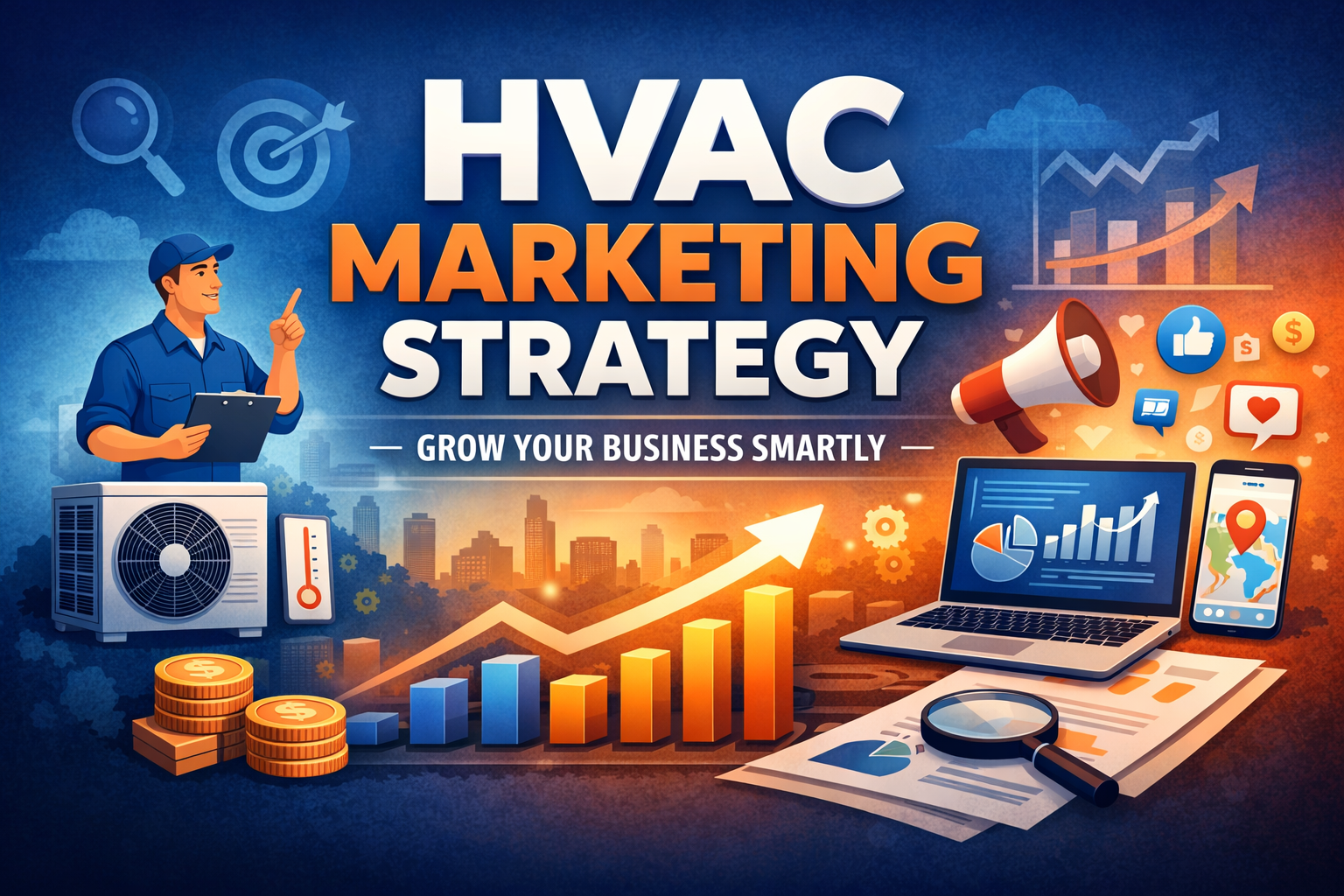
A Smart Marketing Blueprint for HVAC Contractors Marketing isn’t something you should do just because your competitors are. For HVAC businesses to grow consistently, you need a strategic plan backed by real goals, budgets, and measurable tactics — not knee-jerk decisions. Why You Need a Marketing Plan HVAC marketing works best when it’s proactive and repeatable , rather than reactive. A written annual plan gives structure to your campaigns, improves consistency, and helps you avoid wasting money on tactics that don’t deliver results. A basic plan should include: Your business goals for the year A timeline for achieving those goals Defined steps and channels you’ll use The metrics you’ll track to measure success A marketing budget aligned with your revenue Setting Your HVAC Marketing Budget One fundamental question every HVAC owner asks is: how much should I spend on marketing? A reliable benchmark for HVAC companies is to allocate 5%–10% of gross revenue toward your annual marketing efforts — aiming closer to 10% if you’re aggressively pursuing growth. Here’s how to think about this range: 5% of revenue works well if you’re focusing on maintaining steady lead flow 7%–10% of revenue is ideal when you want to expand service areas, boost seasonal demand, or outperform competitors Budgeting this way ensures you have enough funds to invest in the channels that drive quality HVAC leads without overspending. Core Components of an HVAC Marketing Strategy Once your budget is in place, it’s time to build your strategy around key areas that actually move the needle: 1. Brand Foundation Your brand is more than a logo — it’s the look, tone, values, and message your customers associate with your company. Consistent branding builds trust, which is especially important for homeowners choosing an HVAC provider. 2. Website That Converts Your website is the hub of all your digital marketing. Make sure it clearly answers: Who you are What services you offer How to contact you What offers you have (e.g., service plans or seasonal discounts) If you’re spending money driving traffic, but your site doesn’t convert visitors into calls or form submissions, you’re losing money. 3. SEO and Local Search Search Engine Optimization (SEO) helps your business show up when potential customers are searching for HVAC services online. Local SEO strategies like optimizing your Google Business Profile and gathering positive reviews can dramatically increase visibility. 4. Paid Digital Advertising Using targeted ads — especially Google Local Service Ads and paid search — gets your business in front of homeowners actively looking for HVAC help. These paid channels can deliver fast results when optimized correctly. 5. Customer Retention and Reviews Don’t ignore the customers you already have. Encourage reviews, promote maintenance plans, and communicate seasonally. Repeat business and referrals are often the most cost-effective sources of revenue. 6. Tracking and Optimization Whatever you spend, tracking results is vital. Use call tracking, analytics, and lead reporting so you know which channels are generating revenue and which ones are wasting cash. Optimization is how smart HVAC marketers maximize ROI. Final Thoughts  Successful HVAC marketing isn’t based on impulse buys or copying competitors. It begins with a clear plan, a realistic budget based on revenue, and a disciplined focus on activities that deliver measurable results . When you invest strategically — typically between 5% and 10% of gross revenue — and measure continually, you’ll improve lead quality, grow year-over-year, and stay ahead of the competition.
By Chris Smith March 14, 2026
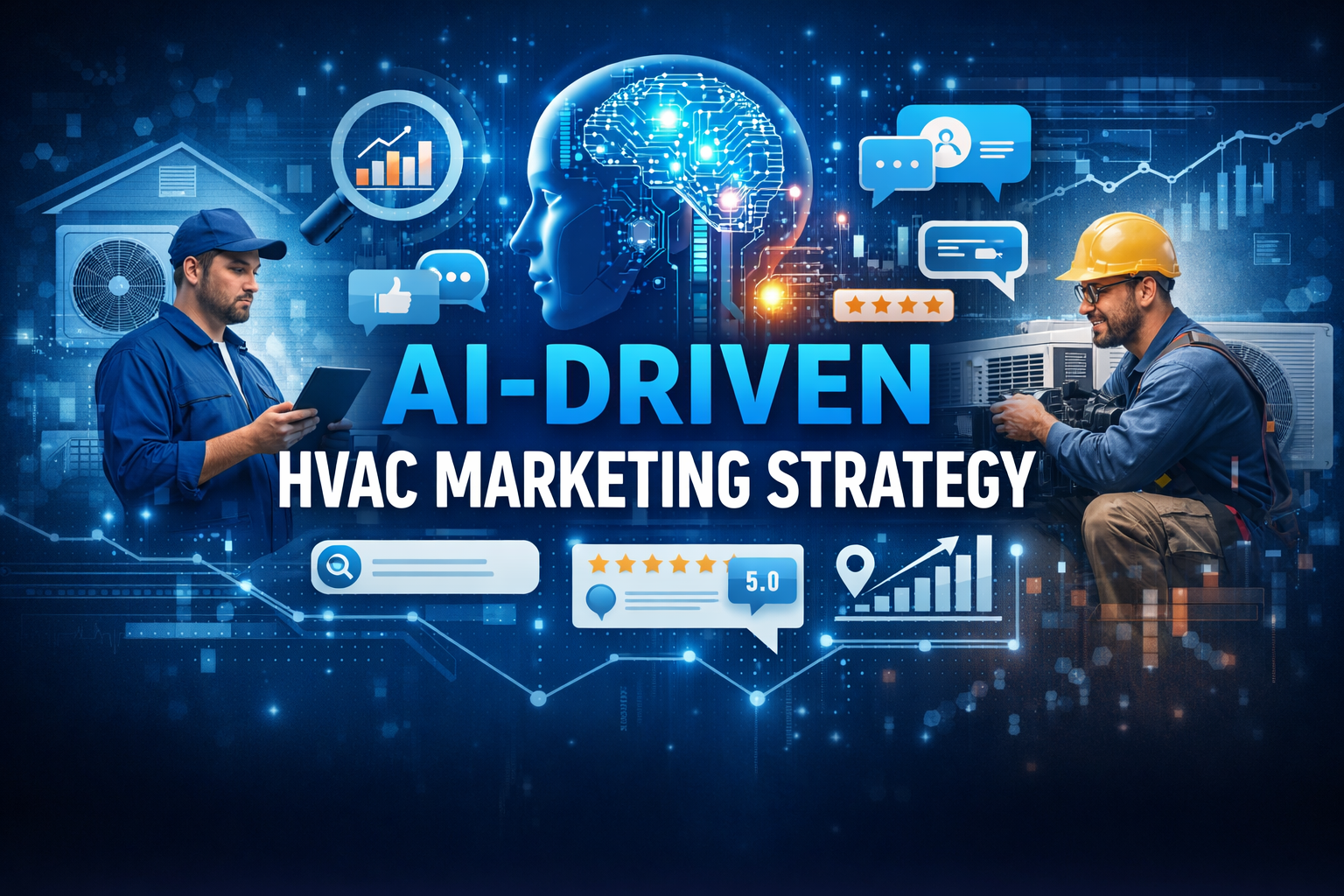
How HVAC Companies Can Build an AI-Driven Marketing Strategy That Works In 2026, HVAC customers are not just finding contractors through traditional search alone—they are comparing reviews, checking directories, browsing maps, and increasingly relying on AI-driven tools to decide who to trust At All Contractor Marketing, we specialize in HVAC marketing, so we understand how these changes are reshaping the way contractors get discovered, evaluated, and chosen online. AI is not just another trend for this industry; when applied strategically, it helps HVAC companies improve visibility, strengthen trust, automate key marketing tasks, and make smarter decisions that lead to more booked jobs. Here’s how an AI-driven marketing strategy works and why ACM is uniquely positioned to help HVAC companies use it effectively. What Is an AI Marketing Strategy for HVAC? An AI marketing strategy uses smart technology to: Understand how potential customers find your HVAC business online Monitor your reputation across platforms (search engines, maps, reviews, etc.) Automate repetitive tasks like review responses, posting content, and message replies Enable faster decision-making based on real customer data This is not about replacing your team — it’s about amplifying what you already do well by letting AI handle the heavy lifting. Why HVAC Contractors Need AI in Their Marketing Here’s how AI can make a noticeable difference in your HVAC business: 1. Get Found More Easily Online Customers discover HVAC services in many places — Google, Yelp, Facebook, Maps, and AI chat tools. AI helps you understand where your customers start their search and ensures your business shows up in the right places. Keeping your listings accurate and updated across platforms increases visibility and leads. 🔑 Tip: Consistent business information (hours, services, contact info) across directories improves search rankings and builds trust with customers. 2. Build Online Trust With Better Reviews Online reviews are one of the biggest deciding factors for homeowners choosing an HVAC contractor. AI can help you: Collect more reviews by prompting satisfied customers Respond to reviews quickly and professionally Spot trends or issues in customer feedback Positive reviews and timely responses boost search visibility and help convert more visitors into booked jobs. 3. Automate Repetitive Marketing Tasks AI tools take over time-consuming tasks like social scheduling, review monitoring, and performance reporting. That means your team can focus on customer service and field operations while AI handles routine work behind the scenes. Examples of automation: AI-generated social posts sharing seasonal HVAC tips Auto-responses to customer messages after business hours Alerts when a review needs attention 4. Make Data-Driven Decisions AI analyzes customer interactions and behavior across multiple platforms. This gives you real insights into: Which marketing channels are driving calls What keywords customers use to find you Where demand is growing or slowing With this intelligence, you can invest your marketing budget smarter and scale activities that work. How to Build Your AI-Powered HVAC Marketing Strategy Here’s a practical framework HVAC companies can use to start seeing results: 1. Audit Your Current Marketing Begin by looking at what you already have: Your website performance Search rankings Review volume and sentiment Social engagement metrics This audit shows where AI can boost results the most. 2. Set Clear, Measurable Goals Don’t adopt AI just because it’s trending. Set specific goals such as: Increase booked service calls by X% Grow online review count Reduce time to respond to leads Clear goals help you track progress and prove ROI. 3. Choose the Right AI Tools AI marketing tools should: Integrate with your website and CRM Help with SEO and content creation Improve customer engagement Automate tasks without losing brand voice Start simple and scale up as you see results. 4. Train Your Team AI is most effective when your team knows how to use it. Provide training so everyone understands: What the tools do How to interpret AI insights When to step in manually 5. Monitor and Adjust Continuously monitor results and make adjustments. AI can surface trends and opportunities that help you stay ahead of competition — but you still need to guide it with strategy and oversight. Final Thoughts AI is transforming HVAC marketing, but results do not come from using random tools or chasing trends; they come from applying the right strategy to the right parts of your business. The contractors who benefit most from AI are the ones using it to improve visibility, reputation, response speed, and marketing performance in ways that actually generate more leads and booked jobs. That is where All Contractor Marketing stands apart. HVAC marketing is our specialty, and we understand how to turn emerging tools like AI into practical growth strategies that support real business results. If you want expert help building an AI-powered marketing strategy that helps your HVAC company get found, earn trust, and win more customers in 2026, ACM is the team to contact.