
The Impact Ai Will Have on HVAC Marketing
Chris Smith • January 5, 2026
The Impact Ai Will Have on HVAC Marketing
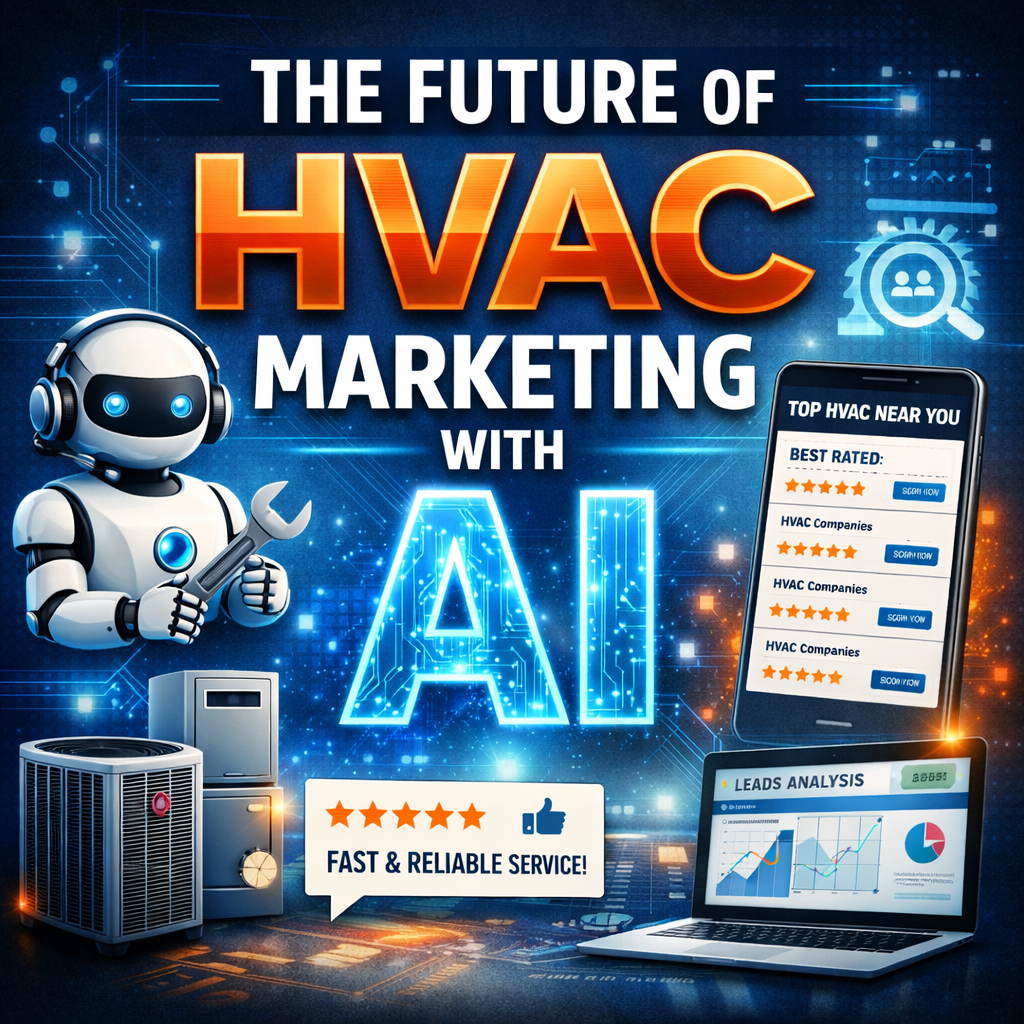
Artificial intelligence is already changing how homeowners discover, evaluate, and choose HVAC companies—and the pace is accelerating. Over the next few years, AI won’t just “help with marketing.” It will reshape the entire journey: how people search, what they see, how quickly they trust, how leads are qualified, and how efficiently contractors turn attention into booked calls.
For HVAC companies, that’s both a threat and a massive opportunity. The contractors who adopt AI thoughtfully will produce better content, respond faster, convert more leads, and spend less time on busywork. Those who ignore it will slowly lose share to competitors who look sharper, answer quicker, and show up in more places with more relevance.
Here’s what the future likely looks like—and how HVAC businesses can prepare now.
The HVAC customer journey is becoming AI-mediated
Ten years ago, homeowners might ask a neighbor, flip through local listings, or click the first result on Google. Today, they still search—but they also consult platforms that increasingly use AI to summarize options, compare providers, and recommend next steps. In the future, many homeowners won’t read ten websites at all. They’ll ask a question like:
“Who are the best HVAC companies near me that do ductless installs?”
“Which contractor offers financing and has strong reviews for heat pumps?”
“Who can replace a furnace this week and won’t upsell me?”
And they’ll get a shortlist generated by an AI assistant—often based on reviews, online signals, service pages, proximity, pricing clues, and availability.
That means HVAC marketing will increasingly be about training the internet to understand your business: what you do, who you serve, why you’re credible, and how easy you are to work with.
Search will shift from keywords to conversations (and HVAC wins will go to clarity)
Traditional SEO has been driven by keywords: “AC repair near me,” “furnace replacement cost,” “HVAC company [city].” Those searches still matter, but the way people ask questions is changing. They’re using longer, more specific queries. They’re speaking into their phones. They’re asking follow-up questions. And AI-driven search experiences increasingly surface answers rather than links.
In that environment, the HVAC companies that win will have marketing built around:
- Clear service explanations (what you do, how you do it, how fast you can do it)
- Local specificity (cities, neighborhoods, service radius, seasonal needs)
- Trust signals (proof of quality, proof of experience, proof of responsiveness)
- Structured information (FAQs, service pages, pricing ranges, “what to expect” sections)
AI is excellent at summarizing well-structured information. It’s also excellent at ignoring vague marketing fluff. So if your website copy reads like, “We’re committed to excellence and customer satisfaction,” that won’t help you much. If it reads like, “Same-day AC repair in Marietta, Smyrna, and Kennesaw. Upfront pricing. Stocked trucks. We service Trane, Carrier, Lennox, Goodman, and Rheem,” AI understands you—and customers do too.
Future-proof principle: the best HVAC SEO will look more like a helpful technician explaining things clearly and less like a marketer stuffing keywords.
AI will make “average marketing” invisible
One of the biggest impacts AI will have is raising the baseline. It will become extremely easy to generate:
- Blog posts
- Social captions
- Email newsletters
- Google Business Profile updates
- Basic ad copy
- Short videos (scripts, voiceovers, captions)
That sounds great, but there’s a catch: when everyone can create “pretty good” content at scale, pretty good stops standing out. Generic content will become noise.
So what will stand out?
1) Real expertise (technician-level insight)
Homeowners can tell when content is written by someone who understands HVAC. The posts that win will have practical details: signs of failure, what a homeowner can check safely, how long replacements take, what to ask during estimates, rebates and seasonal considerations, and brand-specific insights.
2) Local proof and local relevance
AI can generate a “What is SEER2?” article for anyone. It can’t fake your local reputation. Content that includes local climate realities, local building styles, common issues by neighborhood, and actual customer questions from your market will be more valuable.
3) Unique assets (photos, videos, reviews, case studies)
AI can create copy. It can’t replace real before/after installs, photos of your team, and documented success stories. A future HVAC marketing plan will prioritize capturing “evidence” as much as creating “content.”
4) A strong brand voice
AI can mimic tone, but it can’t create your identity unless you define it. Companies with a consistent voice—professional, friendly, no-nonsense, educational—will feel more trustworthy than companies with randomly generated messaging.
Bottom line: AI will amplify the winners and compress the middle. HVAC businesses must shift from producing more content to producing more credibility.
Reviews will become even more powerful—and AI will mine them deeply
Online reviews already influence decisions heavily in home services. In the AI future, reviews become even more critical because AI tools can analyze review text, not just star ratings.
Instead of a homeowner reading 50 reviews, they might see an AI summary like:
- “Customers praise fast response times and clean installs.”
- “Multiple complaints about scheduling and follow-up.”
- “Strong feedback on heat pump expertise and financing options.”
That summary will shape perception instantly.
This changes review strategy in a few ways:
Ask for reviews that mention specifics
Not “Great job!” but “They replaced my furnace in one day,” “They explained the options clearly,” “They helped me choose a heat pump,” “They were respectful of my home,” “They offered financing,” “They fixed my AC the same day.”
Those details train AI systems to associate your company with speed, expertise, cleanliness, and trust.
Respond to reviews like a brand
AI also reads owner responses. Thoughtful replies show professionalism. Defensive replies signal risk. In the future, review responses won’t just influence people—they’ll influence recommendation engines.
Use AI to monitor sentiment
AI tools can alert you when negative trends emerge: “More comments about late arrivals this month” or “Customers mention pricing confusion.” That lets you fix problems before they become reputation damage.
Future-proof principle: reviews won’t just be social proof; they’ll be machine-readable reputation data.
Lead handling will be transformed by AI-driven speed and qualification
Most HVAC companies lose leads for simple reasons:
- Calls go unanswered
- Forms don’t get followed up quickly
- The wrong (low seer/low profit) jobs are booked
- The right jobs (high seer/high profit) take too long to schedule
- Prospects shop competitors because they get faster responses
AI will compress response time expectations. Homeowners will increasingly get instant answers from chat, text, and booking flows. If your business responds two hours later, that will feel slow.
AI-powered chat and texting will become standard
Not “chatbots that frustrate people,” but AI agents that:
- Answer service questions
- Collect key info (brand, symptoms, age of unit)
- Provide scheduling options
- Route emergencies to a human
- Create a polished handoff to your CSR team
- Qualification will get smarter
AI can detect:
- Emergencies vs routine service
- Replacement intent vs repair intent
- High-value jobs vs low-margin jobs
- Distance and service area fit
- Commercial vs residential mismatch
That means better booking efficiency and fewer wasted dispatches.
Follow-up will become automatic and personalized
AI systems will send:
- Estimate follow-ups tailored to what the homeowner asked
- Reminders and prep instructions before appointments
- Post-service review requests with the right timing
- Maintenance plan offers based on the system type
- Seasonal tune-up promotions targeted by weather patterns
The HVAC companies that win won’t just “generate leads.” They’ll convert leads with speed and relevance.
Advertising will become more efficient—and more competitive
AI will impact HVAC advertising in two opposite ways:
- It will make campaign management easier (good for contractors)
- It will make competition fiercer (bad for contractors who don’t differentiate)
- Smarter targeting and bidding
Ad platforms already use machine learning, but AI tools will make it easier for contractors to:
- Identify which keywords and neighborhoods produce profitable jobs
- Forecast seasonal demand spikes
- Adjust budgets automatically
- Detect wasted spend (bad leads, wrong service types)
- Improve landing pages based on conversion data
- Creative testing at scale
AI can generate multiple versions of:
- Headlines (“Same-Day AC Repair,” “Upfront Pricing,” “Heat Pump Specialists”)
- Offer angles (financing, warranties, speed, rebates)
- Visual layouts and short video scripts
This means the average contractor will run more ad tests than ever before, which drives up the bar for performance.
The winners will be those with better first-party data
As privacy rules tighten and tracking becomes harder, the most valuable asset will be your own data: CRM history, job types, close rates, lifetime value, maintenance plan enrollments, and review outcomes. AI is extremely powerful when it can learn from your internal performance metrics.
If you know which leads turn into high-margin replacements and which ones don’t, AI can help you invest more in the right traffic and less in the wrong traffic.
Future-proof principle: ad success will shift from “who spends more” to “who learns faster.”
Content creation will evolve into content systems
Many HVAC marketing plans treat content like a monthly task: “Write four blogs, post on Facebook, send an email.” AI will push contractors toward building content systems—repeatable workflows that create consistent messaging across channels.
Here’s what that might look like:
One core topic becomes many assets
A single topic like “Heat pump vs furnace in Georgia winters” can become:
- A long blog post
- A short FAQ page
- A comparison chart
- A 60-second video script
- 10 social posts
- An email to past customers
- A Google Business Profile update
- A script for CSRs answering phone questions
AI makes repurposing fast, but the strategy is what matters: choosing the topics that reflect what your best customers care about.
Technician knowledge becomes marketing fuel
In the future, the highest-performing HVAC content will come from:
- Field notes
- Call recordings (with proper consent)
- FAQs from real estimates
- “Here’s what we found” summaries from service calls
- Photos of installs and repairs
AI can turn raw expertise into polished content. Contractors who capture knowledge consistently will create a library of trust-building material that competitors can’t replicate.
Personalization will become expected—and AI will deliver it
In the future, homeowners won’t respond to generic marketing as much. They’ll expect messages that feel like they’re meant for them. AI makes that possible at scale.
Examples of HVAC personalization:
- New homeowner education sequences
- Heat pump education for customers with older furnaces
- Seasonal reminders based on system type
- Filter subscription or reminder programs
- Promotions triggered by weather changes
- Messages based on last service date and equipment age
Personalization isn’t just “nice.” It increases conversion and retention while reducing wasted marketing spend.
And HVAC is a retention business. A replacement customer today can become:
- A maintenance plan member
- A referral source
- A future IAQ buyer
- A second-system buyer for another property
- AI will help contractors manage customer lifetime value, not just lead volume.
- Sales will shift toward AI-assisted trust building
HVAC is high consideration. Homeowners may spend thousands of dollars with a contractor they don’t know. In the future, AI will assist sales teams and comfort advisors by:
- Summarizing customer needs before the appointment
- Suggesting the right options to present (repair vs replace)
- Generating proposal language tailored to the homeowner’s concerns
- Creating follow-up messages that address objections
- Producing comparison sheets and “what to expect” guides
- Helping explain rebates, warranties, and financing clearly
This won’t replace human sales. It will enhance it—and reduce the number of deals lost due to slow follow-up, unclear proposals, or inconsistent messaging.
The biggest winners: companies that combine AI + operations
Here’s the hard truth: AI marketing only works if operations can keep up.
If AI-driven marketing generates more calls but:
- your scheduling is chaotic
- your response time is slow
- your customer experience is inconsistent
- your follow-up is weak
…then you’ll just burn budget faster.
The HVAC companies that win will integrate AI into both marketing and operations:
- Faster lead response
- Better booking and dispatch logic
- Stronger customer communication
- Better estimates and follow-up
- Better review generation
- Cleaner CRM data
Marketing becomes a growth engine when the system behind it is healthy.
Risks and downsides HVAC companies should plan for
AI isn’t all upside. A few challenges will grow:
1) Misinformation and bad advice
AI assistants can be wrong. Homeowners may show up with misconceptions. Contractors will need content that clarifies and corrects common myths safely.
2) Increased commoditization
If every HVAC ad looks similar and every website has the same AI-written pages, customers will compare on price alone. Differentiation becomes essential.
3) Reputation fragility
Because AI summarizes reviews and sentiment, a few bad experiences can influence perception quickly. Strong customer experience and proactive review strategies will matter more.
4) Data privacy and compliance
Using call recordings, customer data, and automation must be done carefully. Contractors should work with reputable vendors and follow privacy best practices.
What HVAC contractors should do now to prepare
You don’t need to become a tech company. You need a practical plan that strengthens your fundamentals while adopting AI where it delivers real ROI.
1) Upgrade your website with ACM to be AI-readable and customer-friendly
- Dedicated pages for core services (repair, replacement, maintenance, IAQ, ductless, heat pumps)
- Location targeting that’s real (not spammy)
- Clear “why choose us” with proof
- FAQs that match real homeowner questions
- Fast speed, mobile-first design, clear calls to action
2) Build a review engine
- Automate review requests
- Ask for specific feedback
- Respond consistently
- Showcase reviews on your site
3) Install AI-assisted lead response
- Chat/text intake
- Automated FAQs
- Appointment routing
- After-hours capture
4) Start capturing knowledge from the field
- Photos
- Short notes
- Common Q&A
- “Before/after” stories
- AI can turn raw notes into marketing assets.
5) Connect marketing to your CRM and job data
When you can track:
- which channels produce which job types
- what closes
- what repeats
…then AI can optimize spend and messaging.
The future of HVAC marketing is faster, smarter, and more trust-driven
AI will impact HVAC marketing by changing how customers search, how they evaluate contractors, and how quickly they expect answers. It will make content creation easier, advertising more competitive, and reputation more machine-readable. The businesses that win won’t be the ones who “use AI” the most—they’ll be the ones who use it to become more responsive, more credible, and more consistent.
In a world where homeowners can get instant summaries and recommendations, trust will be the ultimate differentiator. AI can help you earn that trust—if you feed it the right signals: clear messaging, real proof, excellent reviews, strong customer experience, and fast follow-up.
The future is coming quickly. The HVAC companies that prepare now will find themselves in a powerful position: spending less time on marketing busywork and more time running a business that customers—and algorithms—can confidently recommend. All Contractor Marketing can help you successfully navigate the future of Ai. Contact us today to learn more
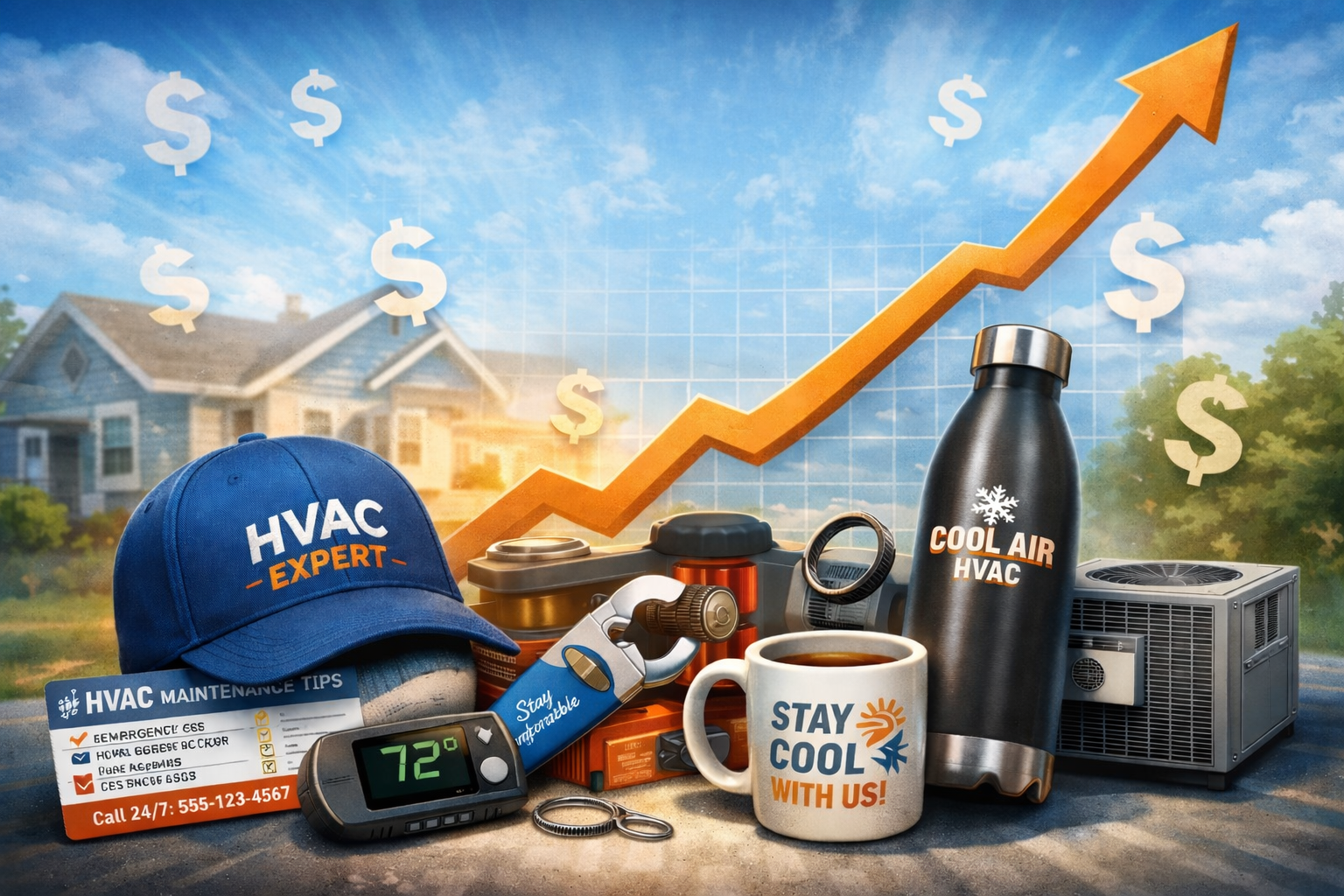
How HVAC Companies Can Use Promotional Products to Grow During a Slow Economy In times when budgets tighten and new leads are harder to come by, HVAC businesses need creative ways to stay top of mind with current and potential customers. Promotional products — when used strategically — can be a cost-effective marketing tool that strengthens brand awareness, boosts customer loyalty, and drives repeat business without draining your marketing budget. Here’s how HVAC contractors can get the most value from promotional products in a softer economy. 1. Take Stock of What You Already Have Before ordering new branded items, check your inventory. If you have leftover promotional gear from previous campaigns — things like branded pens, magnets, or reusable bags — consider repurposing them in upcoming promotions or customer appreciation efforts. Reusing existing stock helps stretch your budget further. 2. Choose Products That Reflect Your Brand and Audience Not all swag delivers equal value. For HVAC services target homeowners and property managers who value reliability and comfort. Useful items like branded thermometers, magnetic HVAC maintenance checklists, or quality reusable water bottles keep your logo visible and relevant all year long. Durable items increase daily use and repeated exposure, offering better long-term return on investment than throwaways. 3. Track Impact With Simple Metrics You can make promotional products measurable. Try adding QR codes that link to a special HVAC service offer or maintenance guide, or include promo codes redeemable for tune-up discounts. This lets you track how many leads and conversions came directly from your swag. 4. Prioritize Items With Practical Value In a competitive HVAC market, promotional products that get frequent use are especially powerful. Everyday tools like quality pens, calendars, or utility knives can keep your brand on a customer’s desk or keyring. Even branded magnets with your emergency contact number are practical and appreciated, especially during extreme weather months. 5. Buy Smart to Save Money Bulk ordering can significantly reduce per-item cost. If your business services multiple territories or branches, consider pooling orders with other teams or departments to benefit from economies of scale. Plan ahead to avoid rush fees and ensure timely delivery. 6. Design With Quality and Relevance in Mind Cheap giveaways may generate short-term attention but can diminish your brand’s professional image. Invest in quality items that people will want to keep and use. A well-designed HVAC branded item suggests reliability — just like your services. 7. Create Curated Brand Experiences Instead of handing out single items, assemble thoughtful care packages for specific audiences. For example: A winter readiness kit for homeowners that includes a door draft stopper, branded coffee mug, and maintenance coupon A property manager kit with office essentials and priority service contact details These curated bundles feel more valuable and strengthen emotional connection with your brand. 8. Partner for Co-Branded Opportunities Collaborate with complementary local businesses — like realty agencies or home improvement stores — to co-brand promotional products. Sharing costs and audiences can expand reach while keeping expenses down. 9. Use Promotional Products at Every Customer Touchpoint Give promotional products out at service calls, trade shows, community events, or when customers sign up for maintenance plans. These moments are opportunities to reinforce your brand and remind people that you’re the trusted HVAC partner they can count on. 10. Follow Up After Distribution Your job isn’t done when the item is handed out. Send a follow-up email or text message thanking customers for visiting your booth or for their business, and remind them how to redeem any special offers included with the promo item. This extra touch increases the likelihood of returning business. Final Thoughts Even in a slower economy, promotional products remain a powerful way to nurture customer relationships, build brand recognition, and generate measurable business results. With thoughtful planning, tracking, and customer focus, HVAC companies can turn simple branded items into tools that help grow their business and stay ahead of the competition.
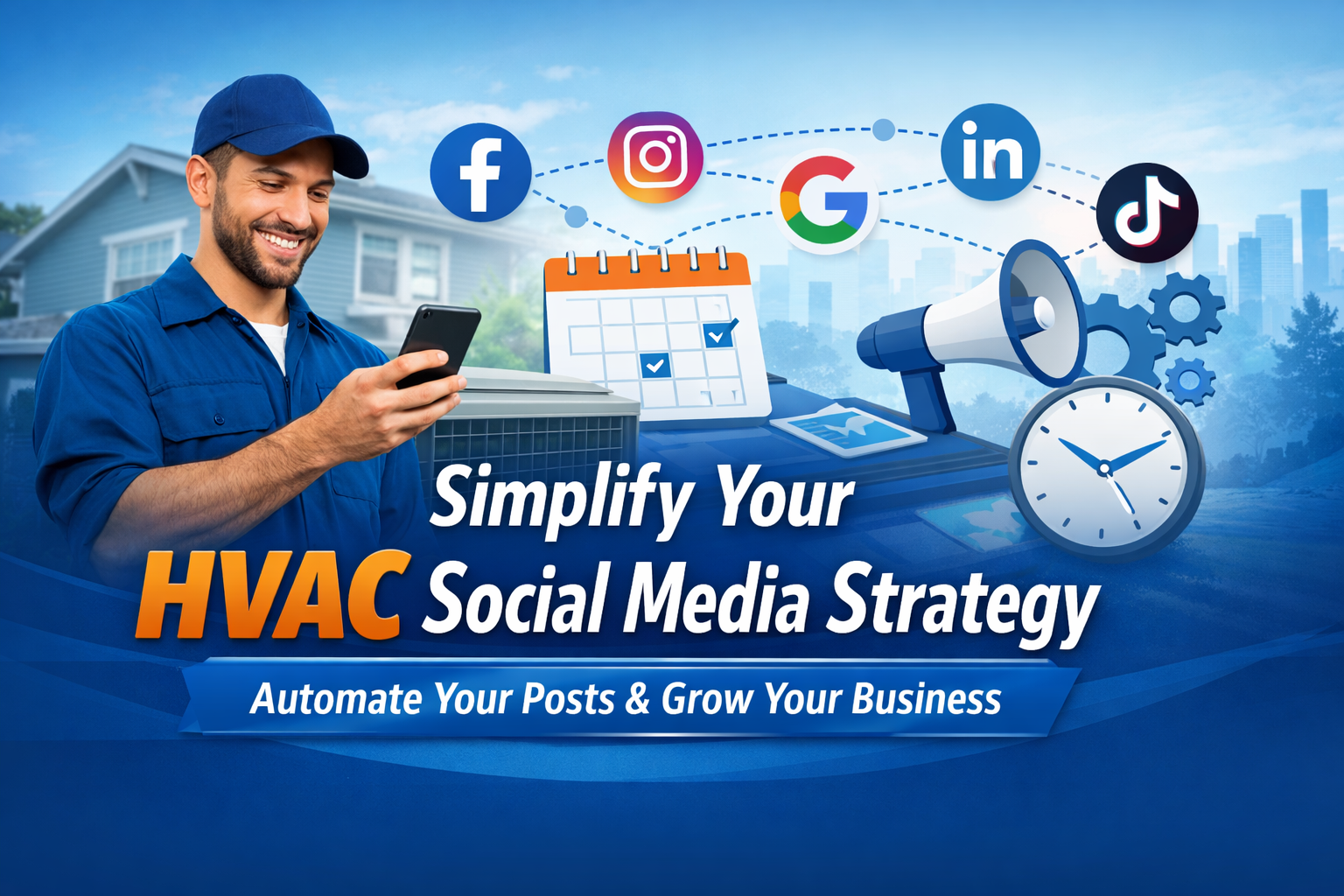
How HVAC Businesses Can Streamline Social Media With Smart Publishing In today’s digital world, staying active on social media isn’t extra — it’s essential. For HVAC companies, regular social posts help you stay top-of-mind with local customers, share seasonal tips, promote service specials, and build trust in your community. But consistently creating and scheduling posts across Facebook, Instagram, LinkedIn, Google Business Profile, and more can quickly become overwhelming. That’s where automated social publishing tools come in. These systems take the guesswork and grunt work out of managing your HVAC social presence by planning, generating, and scheduling content for you — while keeping your brand voice consistent. Why HVAC Social Media Publishing Can Be Hard Most HVAC teams know the struggle: you start the week with good intentions, only to stare at a blank content calendar by Tuesday. Posting regularly across multiple platforms means: Creating new content ideas Customizing messages for each social platform Aligning posts with seasonal needs (think winter heating care or summer A/C checkups) Scheduling at times your audience will engage All of this is time-consuming — and that’s before you factor in approvals and edits. What Social Publishing Tools Do Modern social publishing systems automate the whole content cycle — from planning to posting. They: Generate ideas and posts AI and smart engines analyze industry trends, seasonal events, local needs, top-performing past posts, and competitors to suggest what you should post and when. Tailor content for HVAC audiences By learning your brand voice and service areas, these tools create posts that feel authentic — whether you’re promoting spring tune-ups, sharing energy-saving tips, or highlighting customer testimonials. Fill your calendar automatically Rather than starting from scratch each week, you get a filled content calendar with ready-to-publish posts that align with your goals and local HVAC needs. Handle multi-platform posting Good tools let you publish to Facebook, Instagram, LinkedIn, TikTok, and Google Business Profile all from one place. Support approvals and edits If you want oversight before anything goes live, built-in approval workflows make it easy for your marketing lead to review and adjust posts. Benefits for HVAC Companies Using a dedicated social publishing solution can transform how your HVAC business connects with customers: Save time Automated content generation and scheduling free your team to focus on service quality and customer communication rather than repetitive posting. Increase engagement Consistent posting paired with AI-recommended best posting times can help boost reach and interaction, bringing more eyes to promotions, maintenance tips, and seasonal reminders. Stay relevant locally Rather than generic national posts, these tools help craft messages that make sense for your specific service areas — a key advantage for local HVAC businesses trying to build regional authority. Grow your brand voice AI learns your style over time, producing content that sounds like you — not robotic or generic. Best Practices for HVAC Social Publishing Here are a few tips to get the most out of your social publishing system: Plan seasonal campaigns. Highlight preventative maintenance in spring and fall, energy-saving summer tips, emergency service readiness in winter, and any promotions you run. AI tools can help populate these into your calendar. Mix educational content with promotions. Balance service specials with helpful HVAC tips — like how to change filters or when to schedule a pre-winter check. AI tools often pull trend data to help you do this effectively. Review and customize. Automated uploads are great, but always glance at suggested posts to ensure they fit your brand and local audience. Track results. Use analytics to see which posts get the most engagement and let that guide future topics. Many social publishing tools include reporting dashboards. Conclusion For HVAC businesses aiming to grow their online presence without spending hours each week on content creation, automated social publishing tools are a game changer. By generating on-brand, locally tailored posts and scheduling them at optimal times, these systems make social media management efficient and effective — helping you attract new leads and deepen engagement with your community.
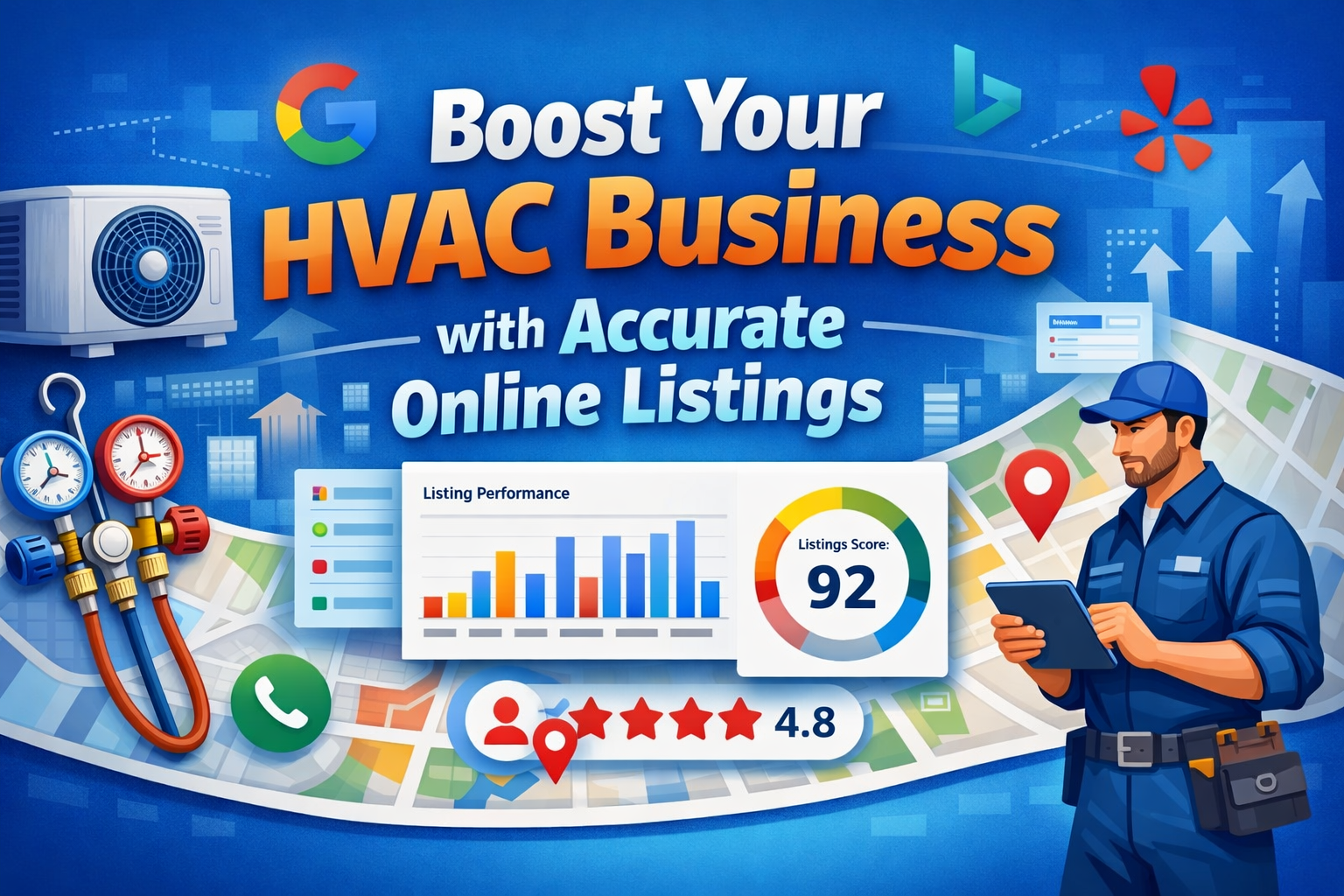
Why Accurate Online Listings Are a Game Changer for Your HVAC Business As an HVAC contractor, getting found online isn’t optional anymore — it’s essential. When homeowners search for “AC repair near me” or “furnace installation,” your business needs to show up with accurate, complete information across all the major directories to win that lead. One of the most impactful ways to improve your local visibility and attract more customers is through well-managed online listings and reporting. What Are Online Listings? Online listings are your business profiles across platforms like Google Business Profile, Apple Business Connect, Yelp, Bing Places and many industry-specific directories homeowners use to find HVAC services. These listings include your company name, address, phone number (NAP), hours, services offered and often customer reviews. Maintaining accurate listings helps you show up in local search results when potential clients are actively looking for HVAC help. Why HVAC Listings Matter More Than Ever Search engines use business listings to understand who you are and where you operate. Accurate, consistent listings across the web: Boost local SEO rankings because search engines trust consistent data. Connect customers quickly with up-to-date details like emergency service hours or new contact numbers. Increase credibility by showing reviews and complete business information. For HVAC contractors — where services are often urgent — listings can be the difference between a new job and a lost customer. The Power of Listings Reporting Simply having listings isn’t enough; you need to know how they perform. Listings reports help HVAC businesses analyze how customers find and interact with their profiles online. With reporting tools you can: Measure visibility and engagement like how many times your listings appeared and what actions users took (calls, clicks, directions). Check profile accuracy to ensure your hours, phone and services are correct everywhere. Track keyword rankings so you can optimize for HVAC-specific searches like “emergency AC repair” in your city. Compare performance over time to see what’s working and where to improve. This data allows you to make smarter decisions about where to invest your marketing efforts and how to optimize listings for more calls and bookings. Listings Score and Why It Matters Most reporting tools also give you a Listings Score, a snapshot of how strong your online presence is across platforms. A higher score means: More accurate information across directories Better local search rankings Higher trust from search engines and customers Improving your listings score over time should be part of your HVAC marketing strategy. Best Practices for HVAC Listings To get the most from your listings: Claim and verify your profiles on Google, Yelp, Apple and industry directories. Keep NAP consistent across all platforms — mismatches hurt your SEO. Use HVAC-specific keywords so your listings appear in relevant local searches. Encourage customer reviews and respond professionally. Monitor performance and update listings as your services or hours change. Conclusion For HVAC companies looking to grow online and convert more local searches into real service calls, accurate and well-managed online listings are foundational. Combine them with regular performance reporting to track progress and continuously improve your visibility. That’s how you stay ahead in a competitive local market and make sure customers find your HVAC business first when they need help the most.